
Last updated November 21, 2026
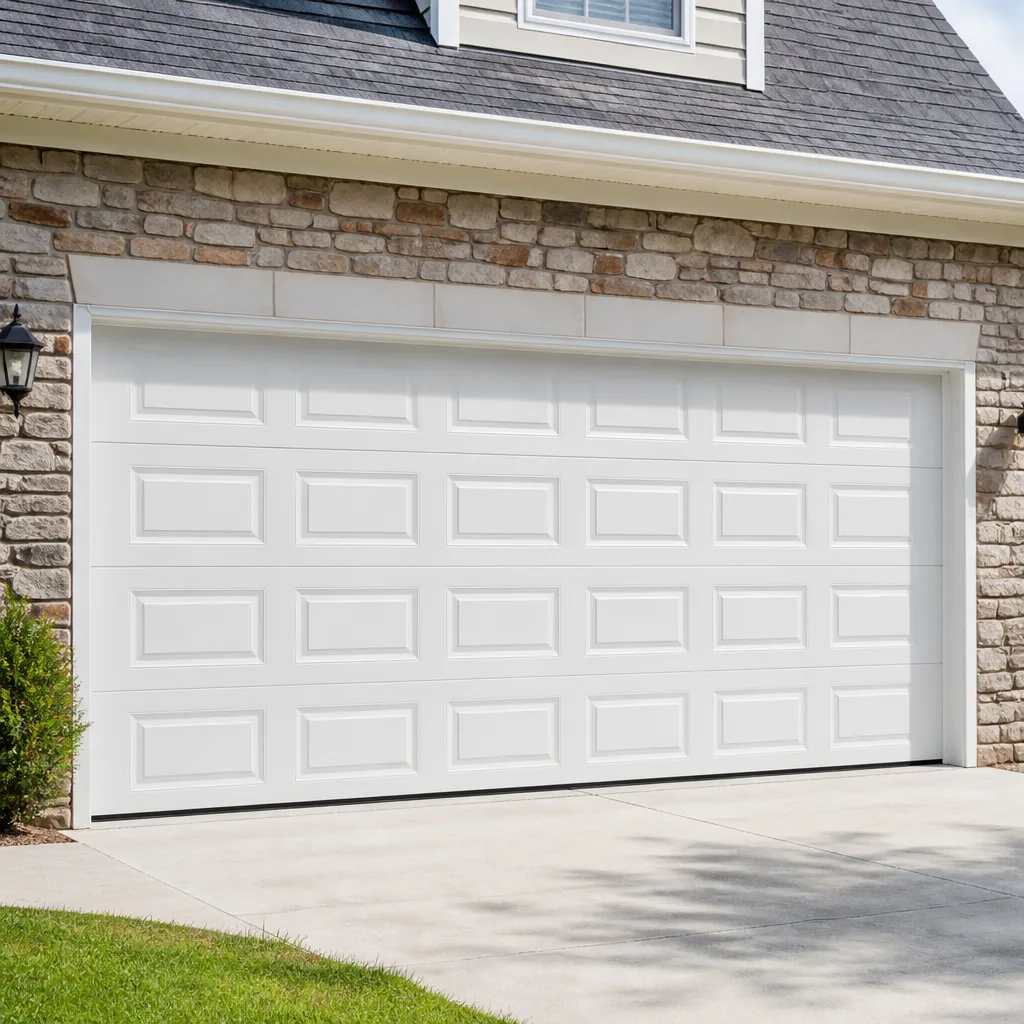 Raised-panel steel
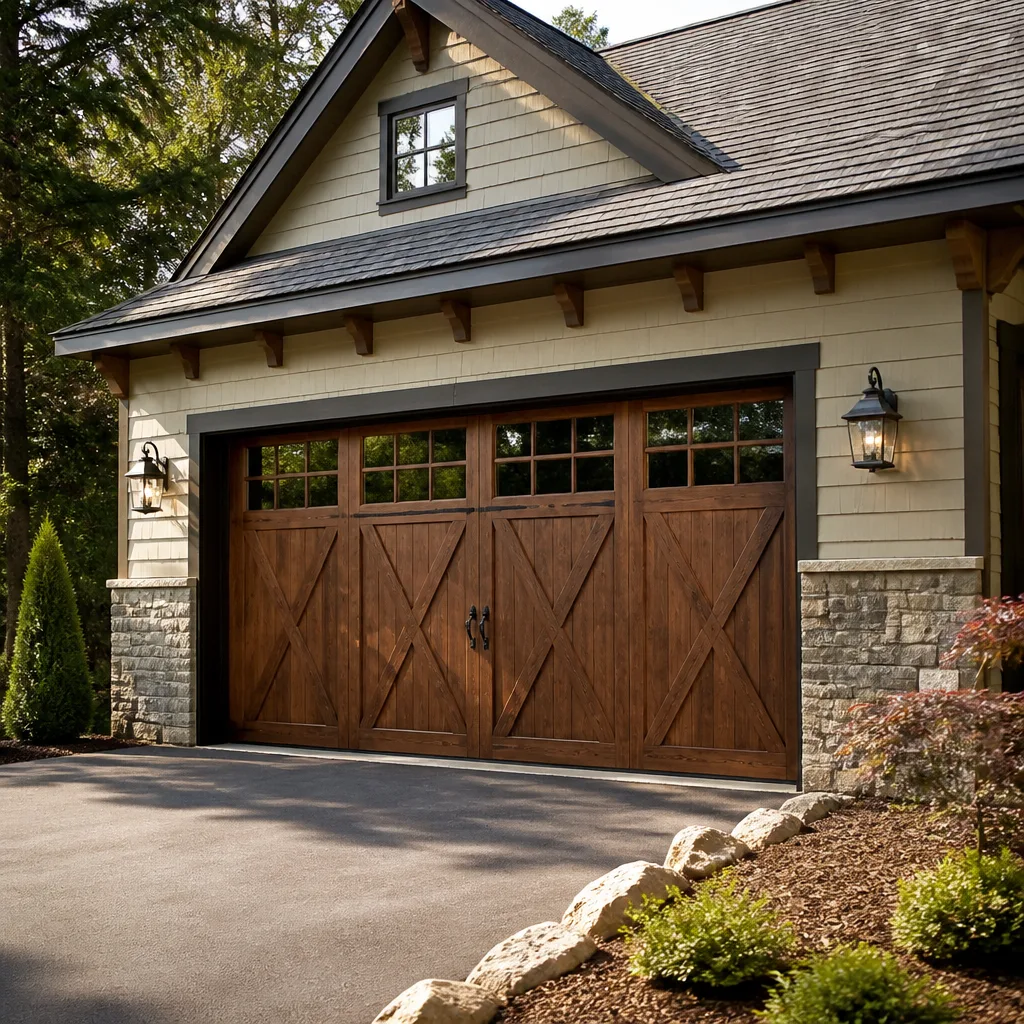 Carriage house
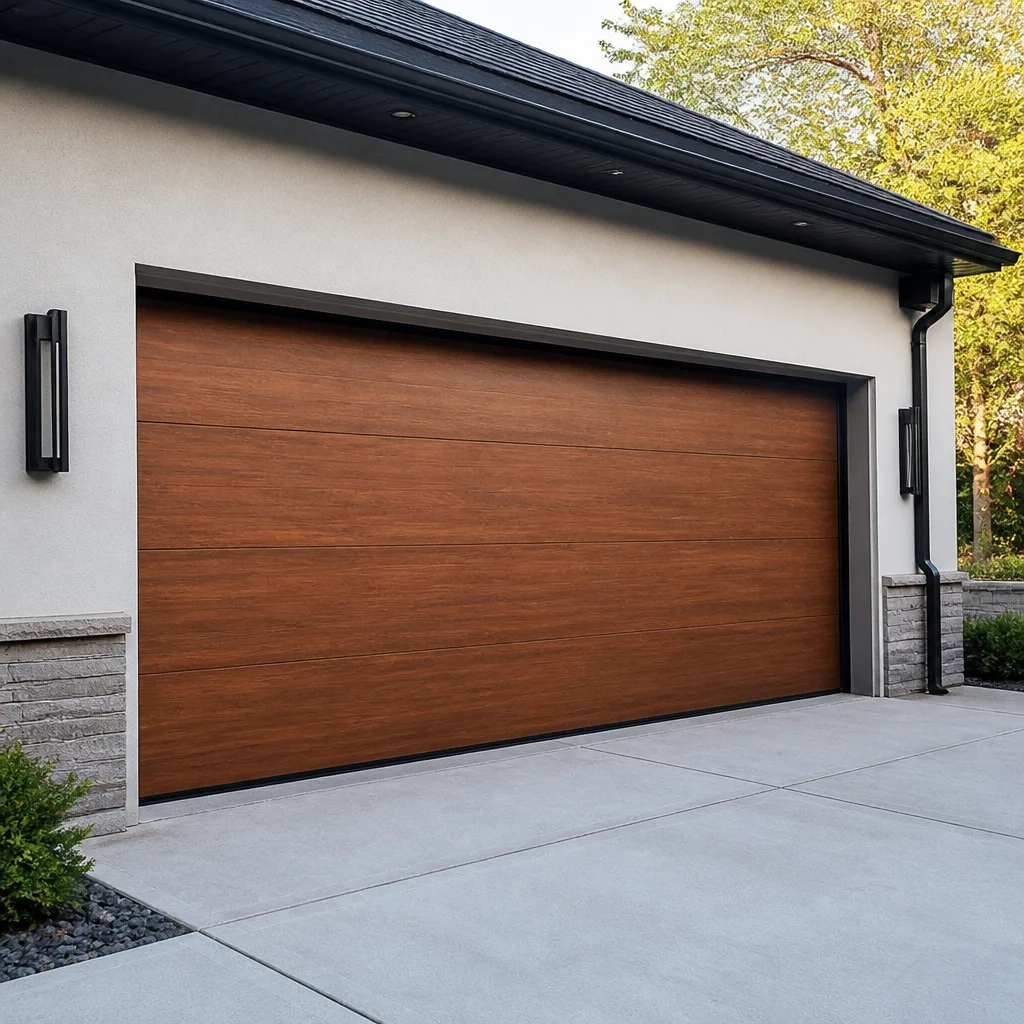 Modern flush
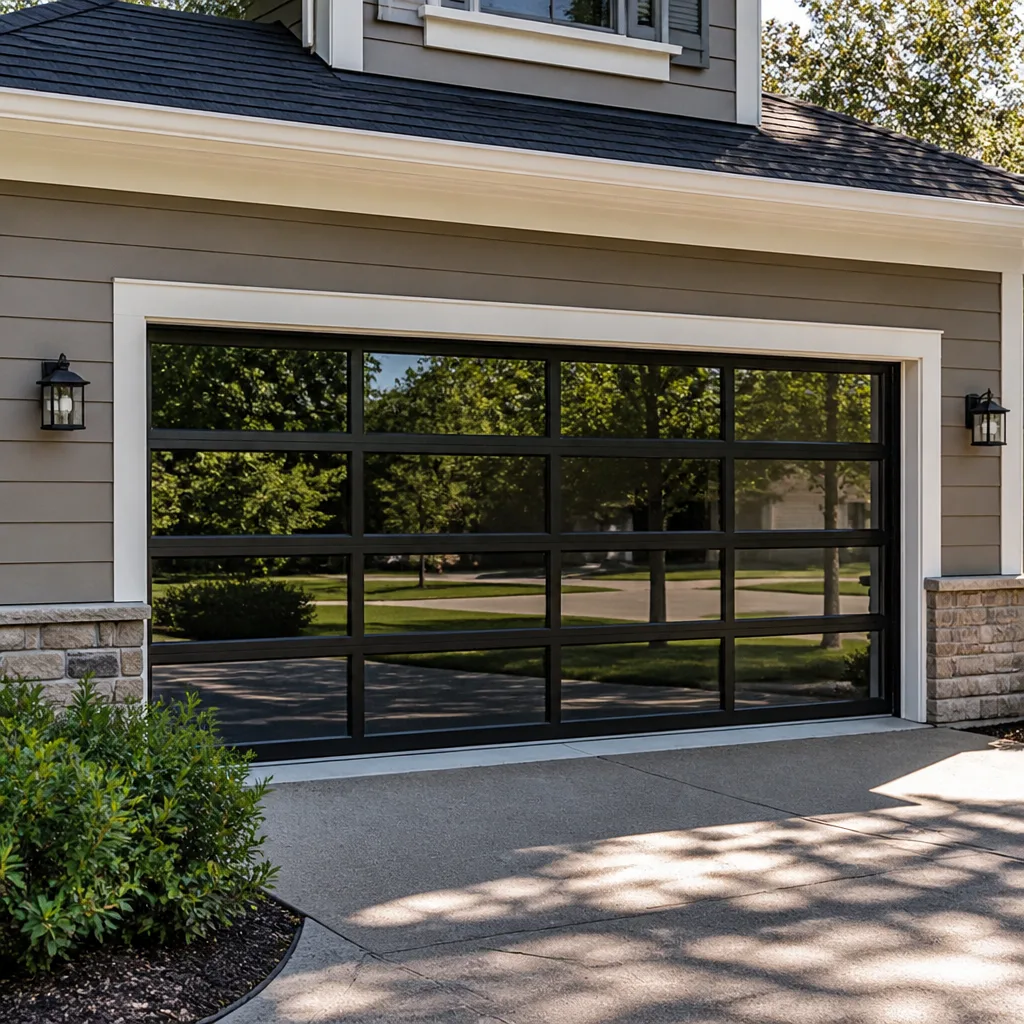 Full-view glass
 LiftMaster openers
 Chamberlain openers
Full 25-point door and opener safety check with every visit - springs, cables, rollers, tracks, and your LiftMaster or Chamberlain opener included
You get a price before we start. It does not change when the pro arrives.
Get your free estimateSeasonal Garage Door Care for Paterson: Year-Round Homeowner’s Guide
Most garage door advice treats the seasons as a checklist: oil this in fall, sweep that in spring. That misses the point. A garage door is a machine made of steel, wood, rubber and springs, and every one of those materials responds to temperature and moisture. In Paterson, the swing from humid summer afternoons to hard winter nights is wide enough to work that machine every single year. This guide maps the weather you actually live in to the parts it stresses, so you understand why a door that ran quiet in October starts groaning in February. By the end, you’ll know what to check, what to leave alone, and when a Paterson garage door has reached the point where a trained technician needs to look at it.
Quick Answer
Seasonal garage door care in Paterson comes down to four jobs: prepare the springs and hardware before the first hard freeze, inspect cables and bottom seals after winter’s freeze-thaw cycles, address humidity-driven swelling in summer, and torque and lubricate everything in fall before temperatures drop again. The single most important habit is a visual and listening check each time the seasons turn, since most failures announce themselves before they break.
Styles & brands we work with
- Raised-panel steel
- Carriage house
- Modern flush
- Full-view glass
- LiftMaster openers
- Chamberlain openers
Table of Contents
- Why Paterson’s Weather Is Hard on Garage Doors
- Winter: Cold, Contraction, and Spring Tension
- Spring: The Highest-Risk Season for Cable Snaps
- Summer: Humidity, Wood Swelling, and Track Stress
- Fall: The Pre-Winter Prep Sequence
- Year-Round: How Paterson’s Urban Conditions Accelerate Wear
- A Simple Monthly Walk-Around
- Common Mistakes to Avoid
- When to Call a Professional
- Frequently Asked Questions
Why Paterson’s Weather Is Hard on Garage Doors
Paterson sits in a part of New Jersey where winter doesn’t stay cold. Temperatures push above freezing during the day and drop back below it at night, over and over, through the whole season. That cycle is the real enemy. A garage door’s components don’t just get cold – they get cold, warm, cold, warm, and each swing makes metal expand and contract a little. Multiply that by a full winter and you get loosened fasteners, stressed cables and springs that have been asked to do slightly more work than they were set up for.
Summer brings the opposite problem. Paterson’s summers are humid, and humidity is what separates how a wood door and a steel door age. Wood absorbs moisture and swells. Steel doesn’t swell, but the humidity still affects lubricants and can encourage rust on any bare metal. The same door that behaved in June can bind in August simply because the material took on water.
Layer on top of that the everyday reality of a dense city: street traffic, road salt in winter, and airborne grit. A garage door near a busy Paterson street is exposed to more particulate than one on a quiet suburban lot, and that grit settles into tracks, rollers and hinges. Over a year, it’s the difference between a door that glides and one that grinds.
Here’s the point most seasonal guides miss: the four seasons aren’t four separate to-do lists. They’re one continuous stress cycle. What you do in fall determines how much damage winter does. What winter does determines how risky spring becomes. And so on. Understanding the chain helps you act before a small issue becomes a repair bill.
Winter: Cold, Contraction, and Spring Tension
Winter is when a torsion spring is under the most invisible strain. Torsion springs are wound steel, and cold makes steel contract. When the spring contracts, the stored energy and the balance point of the door shift. A spring that was perfectly matched to the door’s weight in September is, in a January cold snap, working against a slightly different load. That’s why a door can suddenly feel heavy, run roughly, or fail to stay fully open during a cold stretch.
Before the first hard freeze, there are a few things worth doing:
- Listen to the door on a cold morning. A sharp bang, a grinding sound, or a door that lurches is a sign the spring or hardware is already stressed. Note it now, not in January.
- Check the bottom seal. The rubber weather seal at the bottom of the door gets stiff in cold and can crack or pull away. A seal that’s already brittle will fail fast once freezing starts, letting cold air and moisture in.
- Look for rust on hinges and bottom brackets. Cold doesn’t cause rust, but it makes an existing rust spot more likely to seize. A hinge that’s stiff in October will be frozen solid in February.
- Test the door’s balance gently. If you can safely lift the door by hand partway and it doesn’t hold roughly where you leave it, the springs are out of balance. Don’t adjust them yourself – call a technician.
One safety note that matters every winter: springs, cables and bottom brackets are under extreme tension. Never try to adjust, tighten or replace a torsion spring yourself. A spring that releases without warning can cause serious injury. If the door feels wrong in cold weather, that’s a job for a trained technician, and it’s exactly why we handle garage door spring repair in-house rather than sending it elsewhere.
Also worth doing before winter: clear grit from the tracks and apply a proper lubricant to hinges and rollers. Cold thickens lubricant, so a door that was over-lubricated with the wrong product in summer can feel sluggish in the cold. A light, cold-rated lubricant applied sparingly does more than a heavy coat.
Spring: The Highest-Risk Season for Cable Snaps
Post-winter is when Paterson garage doors are most likely to have a cable snap. This surprises people, because spring weather feels gentle. But the mechanism is predictable: all winter, the door’s cables were cycling between cold contraction and warm expansion. Steel cable doesn’t stretch evenly through that, and the strands can fatigue at the points where they wind around drums and pulleys. By the time temperatures rise, the cable may already be weakened, and the first warm stretch is when it gives.
So spring is inspection season, not just cleaning season. What to check:
- Cable condition. Look at the cables running along each side of the door. Fraying, kinks, or a cable that’s visibly rusted are signs of fatigue. Don’t touch a cable under tension – just note the condition and call.
- Door alignment. A door that’s suddenly closing crooked, or that leaves a gap on one side, often has a stretched or failing cable on that side.
- Drums and pulleys. These are where cables wear fastest. Wobble or noise here points to a problem that started over winter.
- Bottom brackets and the bottom seal. The bottom bracket takes a lot of stress. Inspect it visually; don’t loosen it, since it’s under tension too.
If something looks off, the right move is a professional inspection rather than a DIY tightening. Cable failure is one of the more dangerous garage door problems because the cable is holding significant force. A trained technician has the tools and the training to work on it safely. In our experience, most spring-season issues we see started as small winter stress points that nobody noticed until they broke.
Spring is also a good time to test the door’s safety features – the auto-reverse and the photo-eye sensors – since winter grit can leave them dirty and unreliable. A door that fails to reverse on contact is a safety concern, not just an annoyance.
Summer: Humidity, Wood Swelling, and Track Stress
Summer humidity changes the physics of your door depending on what it’s made of. A wood door absorbs moisture and swells; a steel door doesn’t. That difference matters because the swelling doesn’t stay in the door panel – it pushes outward against the tracks and rollers, and that stress shows up as binding, scraping or a door that seems to fight its own frame.
If you have a wood door, summer is the season to watch for:
- Panels sticking or scraping. Swollen wood can make the door drag in its tracks. If it starts scraping in July, don’t force it – forcing it stresses the opener and the tracks.
- Gaps at the bottom or sides. Swelling can also distort the door profile slightly, opening gaps where weather gets in.
- Finish condition. A wood door’s finish is its defense against moisture. If the paint or stain is failing, the wood is absorbing more water, which worsens the swelling. Summer is the practical window to address that.
A steel door doesn’t swell, but it doesn’t get a free pass. Humid air plus grit plus any bare metal spot equals rust, and rust on rollers and tracks makes the door rough. Summer is also when people notice opener problems most, because heat can push an aging opener past its limit. If the opener strains or reverses unpredictably in hot weather, that’s a sign it needs attention. We handle garage door opener repair as its own dedicated service, which matters for smart and legacy openers alike – a LiftMaster or Chamberlain system behaves differently from an older Craftsman unit, and knowing the brand and its logic is half the job.
The summer maintenance habit: keep the tracks clean, watch for binding, and check the sensors. Heat and humidity rarely break a door on their own, but they make existing weaknesses louder.
Fall: The Pre-Winter Prep Sequence
Fall is the most important maintenance window of the year, because what you do now sets up how the door survives winter. This is the one seasonal task where sequence matters – a fall prep done in the wrong order can miss the biggest risk points. Here’s the order we’d recommend:
- Inspect the seals first. Check the bottom seal and the side and top weather seals for cracks, stiffness or gaps. Cold will make any weakness worse, so replacing or repairing a failing seal before the freeze is the highest-value fall task.
- Torque-check the hardware. Hinges, brackets and track bolts loosen over the year. A loose bolt in October becomes a wobbly, noisy door in January. Snug them by hand; if a fastener won’t hold, that’s a sign of a bigger issue.
- Clean and lubricate. Clear grit from the tracks, then apply a light lubricant to hinges and rollers. Don’t overdo it – a heavy coat attracts grit and can thicken in cold.
- Reset the opener’s sensitivity and test the safety reverse. Openers, including LiftMaster, Chamberlain and Genie models, have sensitivity and force settings. As the door’s balance changes with the seasons, the opener may need its sensitivity adjusted. Test the auto-reverse and photo-eye sensors so they’re reliable before winter.
- Look at the springs and cables one last time. Note any noise, sag or misalignment. Don’t adjust anything that’s under tension – flag it for a technician.
This sequence works because it follows the stress path: seals protect against moisture, hardware holds the door steady, lubrication keeps motion smooth, and the opener settings match the door’s condition. Doing it in this order catches the small things before they’re buried under winter’s stress.
Year-Round: How Paterson’s Urban Conditions Accelerate Wear
A garage door in Paterson faces something a door on a quiet suburban lot doesn’t: street-level grit and road salt. Winter road salt doesn’t just sit on the road – traffic kicks it into the air as fine spray, and it settles on whatever is nearby, including the bottom of your garage door and the hardware around it. Over a season, that salt spray is one of the fastest ways to corrode bottom brackets, hinges and the bottom of the door itself.
Particulate buildup is the other urban factor. Dust, grit and traffic film settle into tracks and rollers. Left alone, that grit acts like sandpaper on moving parts, wearing rollers faster and making the door louder and harder to move. In a dense city, this is a year-round issue, not a seasonal one.
What to do about it, year-round:
- Wipe down the bottom hardware – hinges, brackets and the lower edge of the door – periodically to remove salt and grit before it corrodes.
- Clean the tracks of grit regularly. A dry cloth does more than you’d expect.
- Touch up any chipped paint or bare metal promptly. The exposed spot is where rust starts.
- Keep the area around the door clear so debris doesn’t get pulled in as the door cycles.
This is the part of seasonal care that isn’t really seasonal. It’s the background wear that happens all year in Paterson and that a few minutes of attention can slow considerably. If you have a brand-name system – a Raynor, LiftMaster or similar – keeping the hardware in good shape protects the whole system’s life, not just the door.
A Simple Monthly Walk-Around
You don’t need to do a full seasonal deep-check every month. A quick five-minute walk-around keeps you ahead of most problems. Here’s a simple routine:
- Run the door once and listen. Any new bang, grind or scrape is a note to take.
- Look at the bottom seal for cracks or gaps.
- Glance at cables for fraying or kinks (don’t touch them).
- Check the tracks for grit and the rollers for wobble.
- Test the safety reverse with a small object in the door’s path.
- Wipe the bottom hardware if it looks salted or gritty, especially in winter.
Done regularly, this catches the small stuff – a stiff roller, a fraying cable, a sensor that’s drifted – while it’s still cheap to fix. The Paterson Garage Door Repair Pros team has found that doors with a regular check tend to fail at the worst moments far less often, because problems get caught while they’re still small.
Common Mistakes to Avoid
Some of the most common seasonal care mistakes are also the most avoidable:
- Over-lubricating in summer. A thick coat of the wrong lubricant attracts grit and thickens in cold. Use a light, suitable lubricant sparingly, and don’t grease the tracks themselves – tracks should be clean, not greasy.
- Ignoring the bottom seal until winter. A brittle seal that fails in a hard freeze is a bigger job than one replaced in fall. Check it before the cold arrives.
- Tightening a torsion spring yourself. This is the single most dangerous mistake. Springs are under extreme tension and can release without warning. Leave spring adjustments to a trained technician.
- Forcing a door that’s binding. If the door drags in humid summer weather, forcing it stresses the opener, rollers and tracks. Find the cause instead of overpowering it.
- Letting salt and grit sit all winter. In Paterson, salt spray from street traffic corrodes bottom hardware. A periodic wipe-down in winter matters more here than in the suburbs.
- Skipping the fall opener reset. An opener that was tuned for a summer door may be mis-set for a winter door. Reset sensitivity and test the safety reverse each fall, especially on LiftMaster, Chamberlain and Genie units.
- Assuming a quiet door needs no attention. A door that’s quiet but has a slightly fraying cable or a loose bracket is a problem waiting for the first cold snap. Look, don’t just listen.
When to Call a Professional
Some garage door issues are genuinely a technician’s job, not a homeowner’s. Call a professional if you notice a spring that’s broken, sagging or making a loud bang; a cable that’s frayed, kinked or visibly rusted; a door that’s come off its tracks or is hanging crooked; an opener that reverses unpredictably, strains or fails entirely; or a door that won’t stay balanced. Any of these involves components under real tension or force, and the risk of DIY work on them is genuine.
Paterson Garage Door Repair Pros offers free estimates in Paterson – call (833) 800-4197. We answer 24/7. Fast dispatch from 7am to 7pm, Sunday through Friday. Our technicians have up to 13 years of experience, and we work with the actual components of the major brands you already own, including LiftMaster, Chamberlain, Genie, Clopay, Amarr, Wayne Dalton, Craftsman and Raynor.
Frequently Asked Questions
Aim for a real inspection each season and a quick walk-around monthly. Paterson’s freeze-thaw winters and humid summers put the door through a full stress cycle every year, so a fall prep before the freeze and a spring inspection after it catch most issues while they’re small. Call (833) 800-4197 for a free estimate if you’re not sure of the door’s condition.
Cold contracts metal and thickens lubricants, which shifts the tension and balance of the springs and makes the door harder to move. The freeze-thaw cycle also stresses bottom seals and loosens hardware. If the door feels heavy or runs rough in cold weather, have it checked – that’s often a spring or hardware issue rather than a coincidence. Call (833) 800-4197 for an exact quote on any repair, and the estimates are free.
Yes, in Paterson it often is. Cables cycle between contraction and expansion all winter, and by the time warm weather arrives the strands can be fatigued. The first warm stretch is when a weakened cable tends to give. A spring inspection is the best way to catch it before it snaps. Call (833) 800-4197 to book an inspection.
Humidity makes wood absorb moisture and swell, which pushes the door against its tracks and rollers. Don’t force it – that stresses the opener and the tracks. Address the moisture and, if the finish is failing, treat it so the wood stops absorbing water. If the door binds badly, a garage door repair visit can trace the cause. Call (833) 800-4197 for a free estimate.
No. Torsion springs and the cables attached to them are under extreme tension and can release without warning. This is the one part of garage door care that should always go to a trained technician with the right tools. If your spring is broken or the door won’t balance, call (833) 800-4197 – we handle spring repair in-house rather than sending it out.
There’s no fixed fee – pricing is set per job by a written estimate, and the estimate itself is free. A simple adjustment costs less than a repair, and catching a problem in fall is generally cheaper than replacing a failed component in winter. Call (833) 800-4197 for an exact quote; you’ll know the price before any work begins.
We’re factory-familiar with LiftMaster, Chamberlain, Genie, Clopay, Amarr, Wayne Dalton, Craftsman and Raynor, so we work with the actual components and logic of your system rather than a generic workaround. If your equipment is one of those brands, tell us when you call (833) 800-4197 and we’ll match the right technician.
We answer the phone 24/7, so you’re never stuck leaving a message. A call outside dispatch hours is booked into the next opening, Sunday through Friday, 7am to 7pm. If the door won’t close and your home isn’t secure, call (833) 800-4197 and we’ll get you on the schedule right away.
The Bottom Line
Seasonal care for a Paterson garage door isn’t about four disconnected checklists – it’s about understanding how weather stresses the machine. Winter contracts and strains the springs. Spring reveals the cable fatigue winter left behind. Summer humidity swells wood and stresses tracks. Fall is your window to prepare before the freeze returns. Around all of that, Paterson’s street grit and road salt quietly wear on bottom hardware all year. Do the fall prep in sequence, inspect each spring, keep the tracks and hardware clean, and leave anything under spring or cable tension to a trained technician. Do that, and your door runs smoother through every season. When you’d rather have an expert do the inspection or the repair, call (833) 800-4197 for a free estimate.
Written by the team at Paterson Garage Door Repair Pros.
See the difference
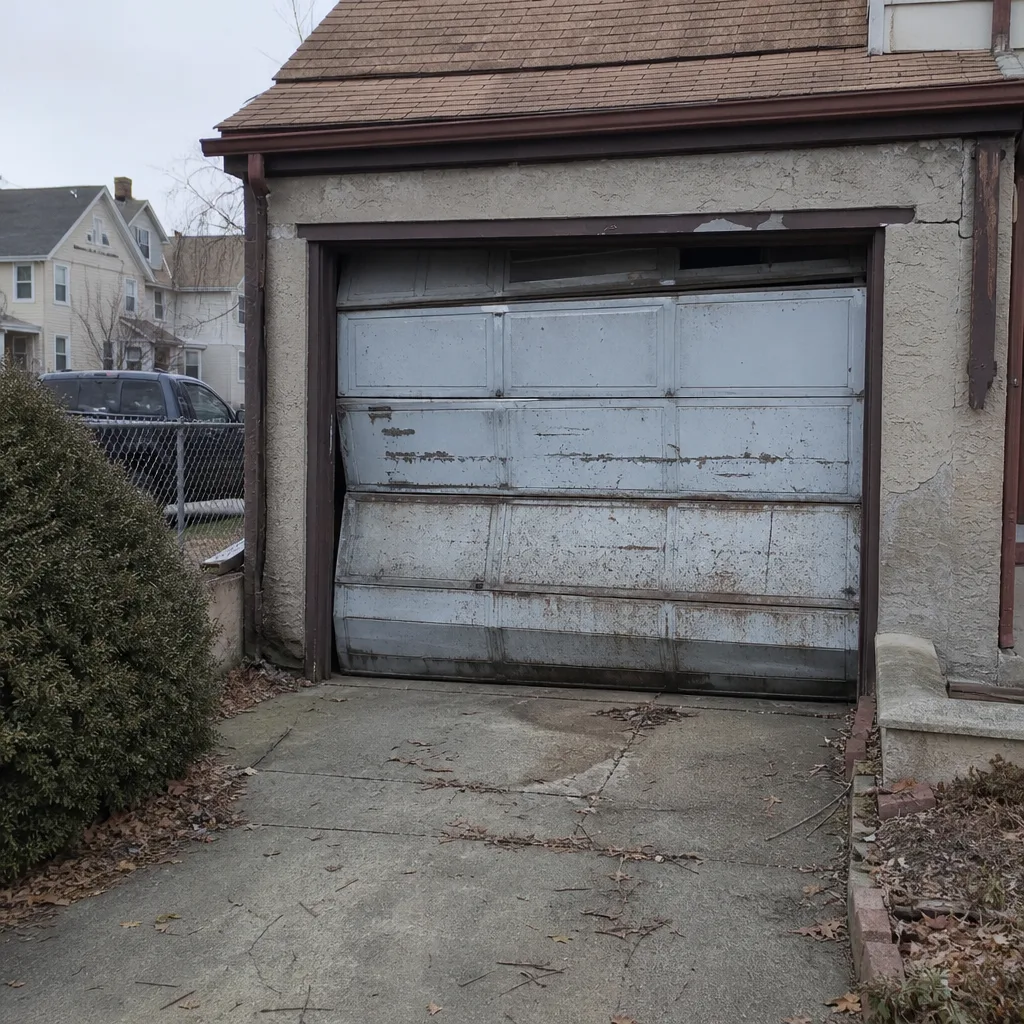 Before
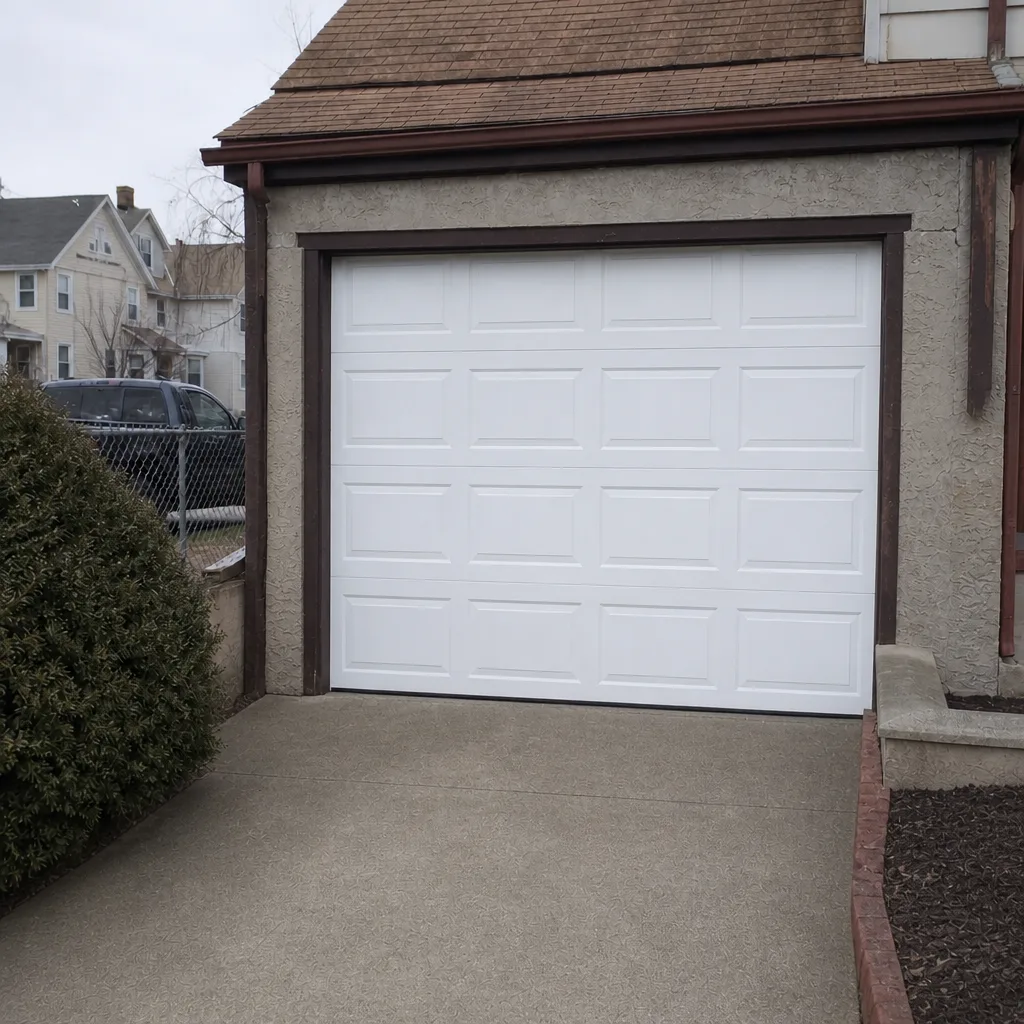 After
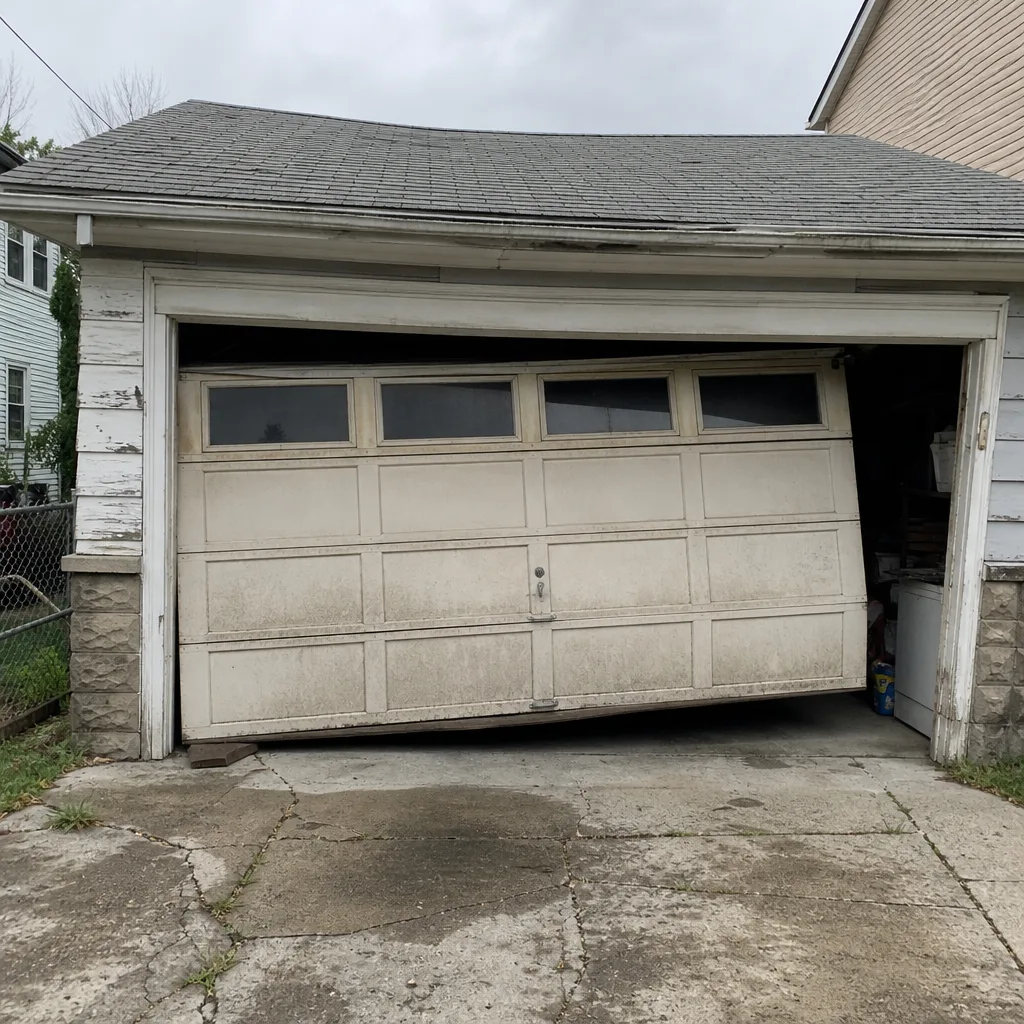 Before
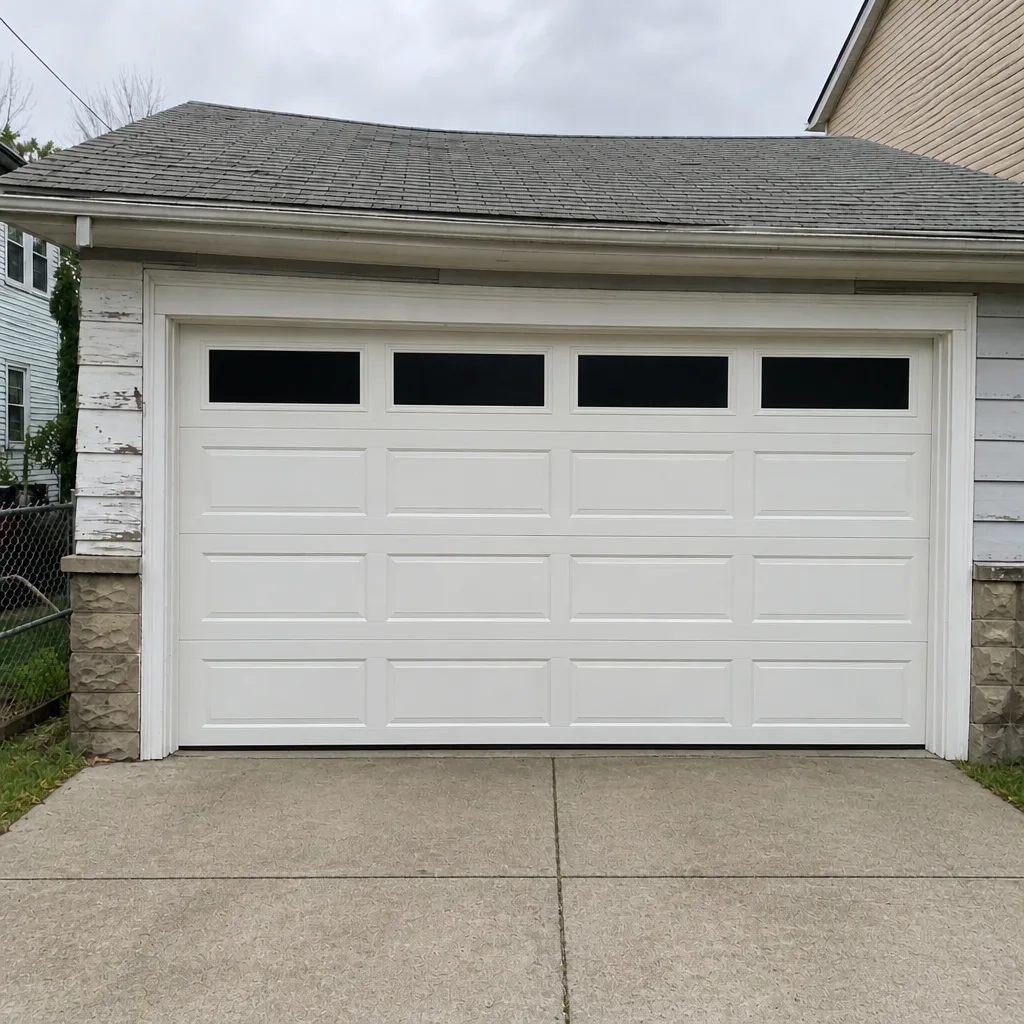 After
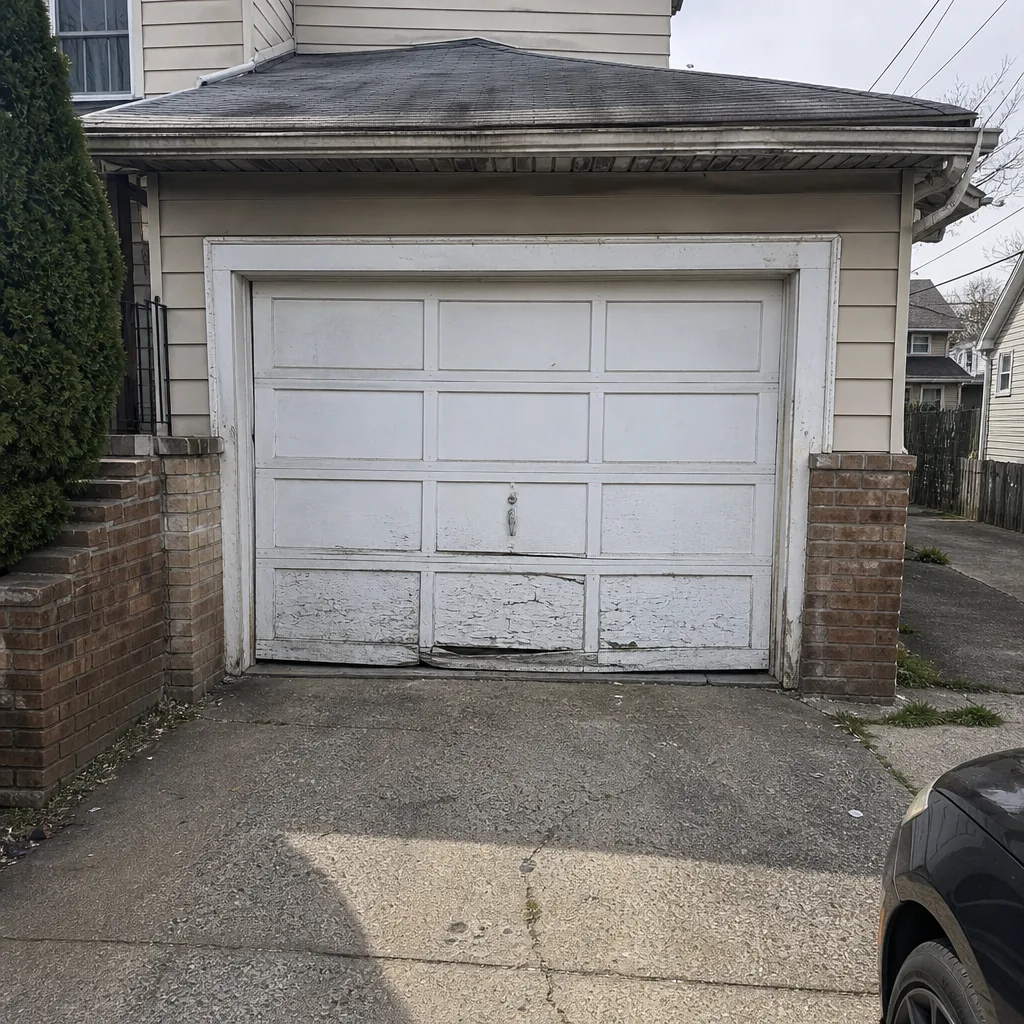 Before
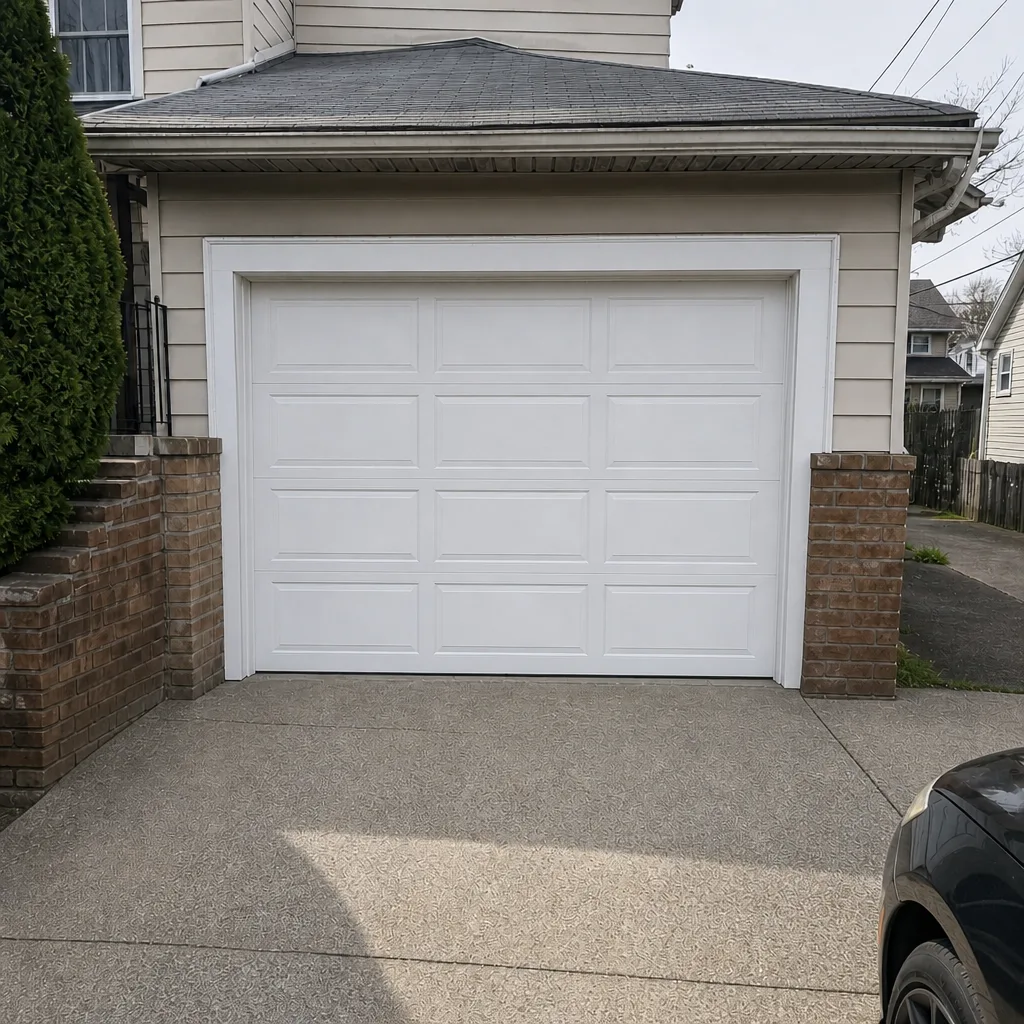 After