
Last updated November 21, 2026
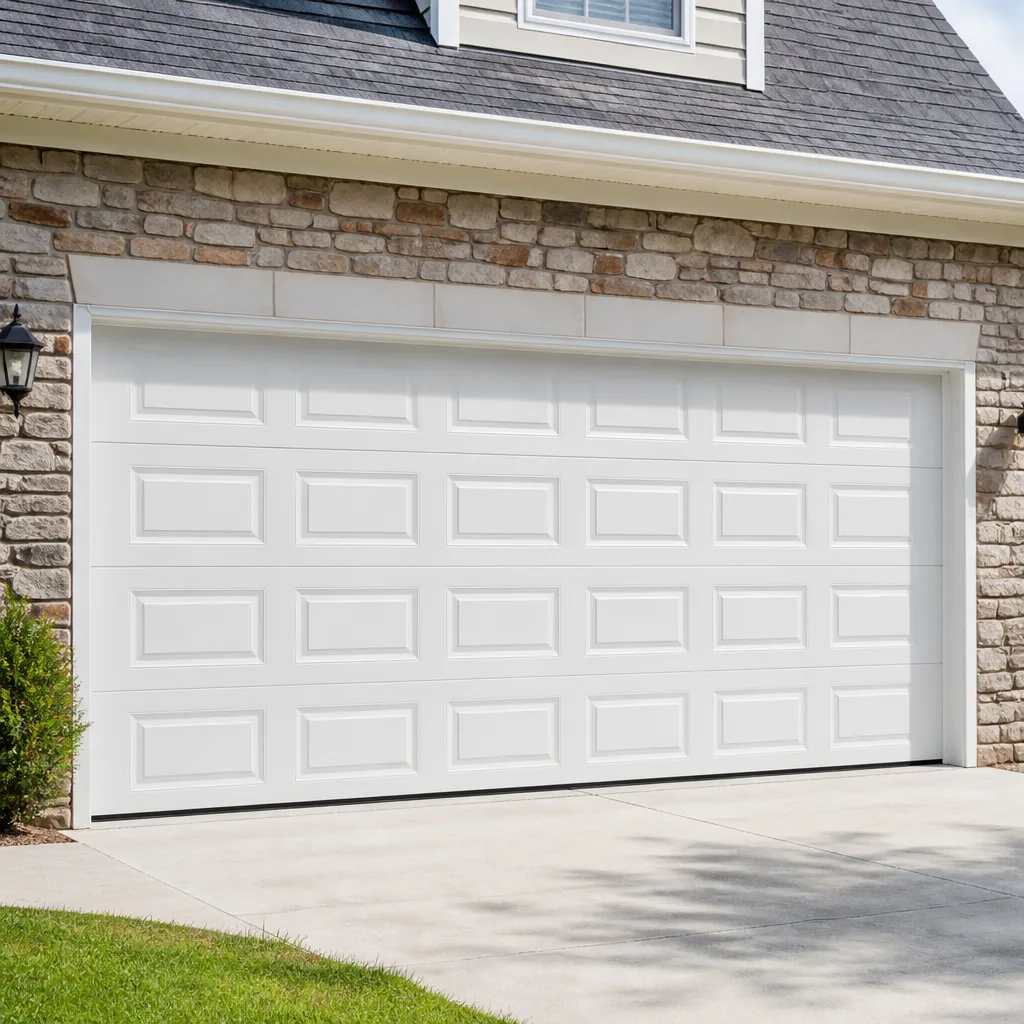 Raised-panel steel
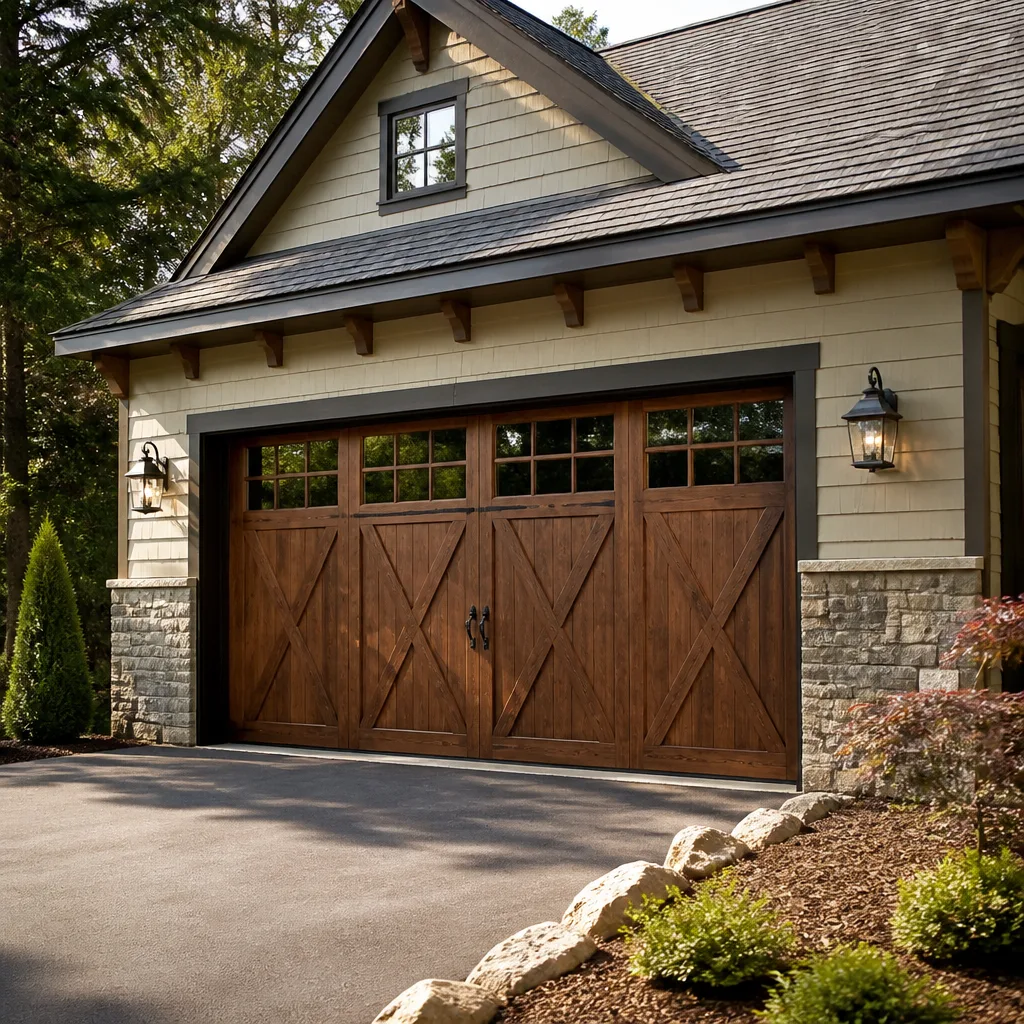 Carriage house
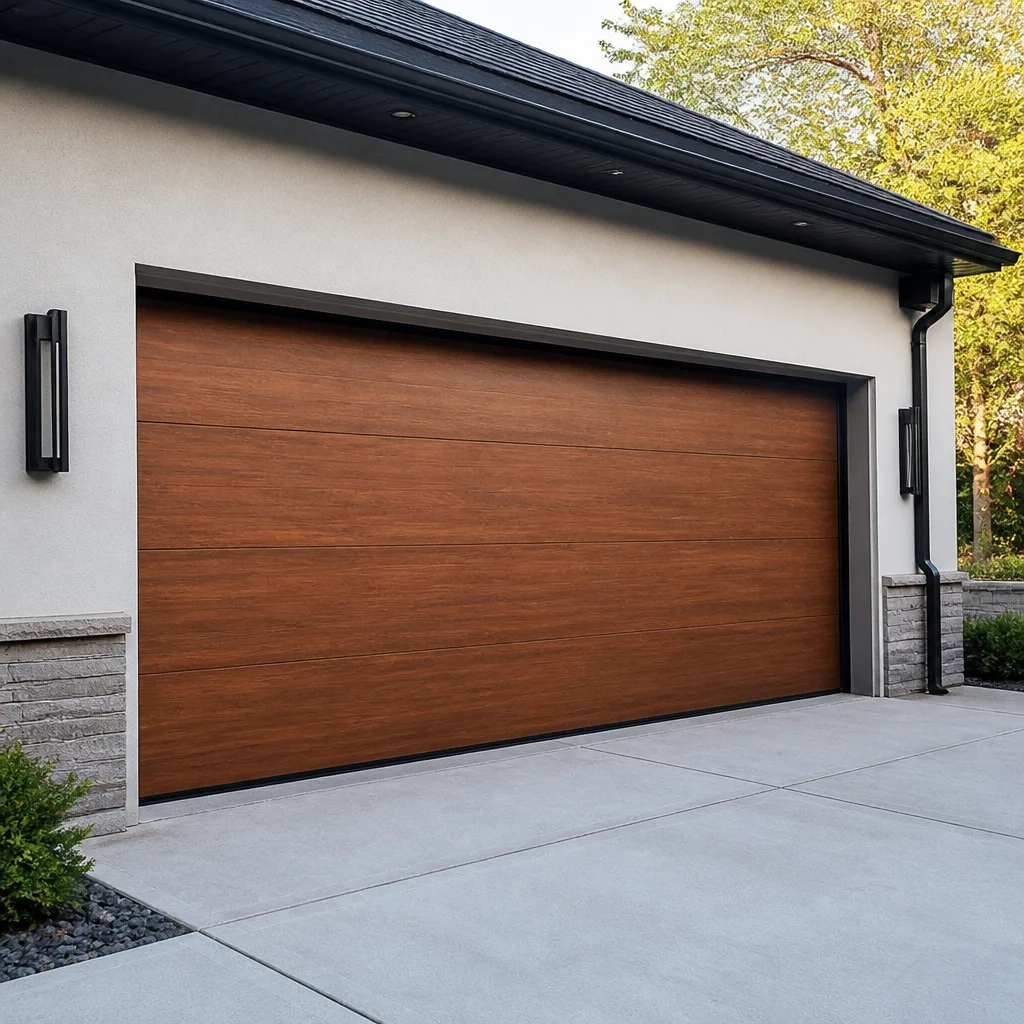 Modern flush
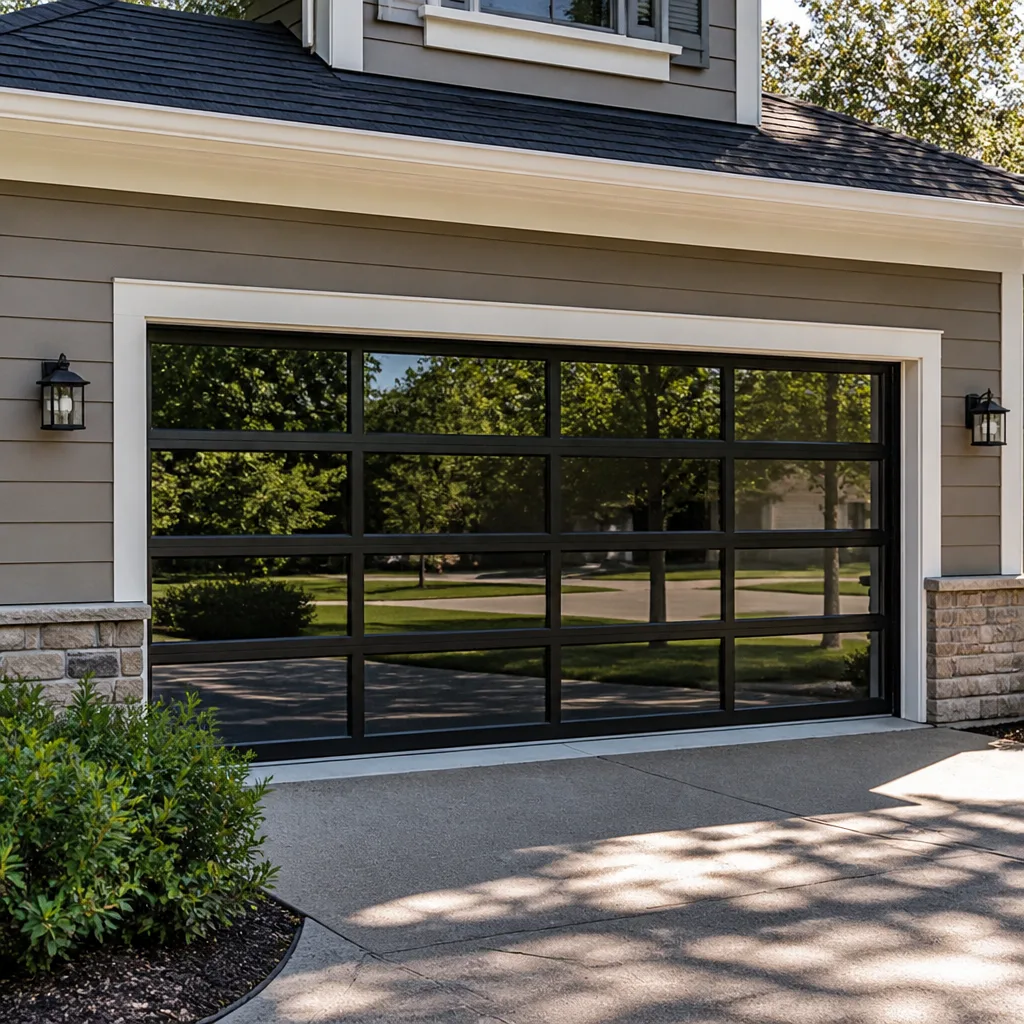 Full-view glass
 LiftMaster openers
 Chamberlain openers
Full 25-point door and opener safety check with every visit - springs, cables, rollers, tracks, and your LiftMaster or Chamberlain opener included
You get a price before we start. It does not change when the pro arrives.
Get your free estimateGarage Door Warning Signs: A Paterson Homeowner’s Reference Guide
A garage door that hesitates for half a second before it opens isn’t “getting old.” It’s often one of the clearest early indicators that a torsion spring is losing tension, and in our experience it usually shows up weeks before a full break, not months. Most homeowners wait for something to snap, jam, or stop dead in the open position before they call anyone. The problem is that by then, a small repair has turned into a real access and security headache. This guide walks through the subtle signals technicians actually watch for in Paterson homes, from the sound the door makes to the way the opener behaves, so you can catch a failing part while it’s still cheap to fix.
Quick Answer
The main garage door warning signs are a door that hesitates or moves in jerks, grinding or squealing during travel, a visible gap between the door and the frame, uneven spring tension, an opener that sounds louder or runs slower than it used to, and photo-eye sensors that drift out of alignment. Catching these early in Paterson means a smaller, lower-cost repair instead of an emergency call when the door fails shut or open.
Styles & brands we work with
- Raised-panel steel
- Carriage house
- Modern flush
- Full-view glass
- LiftMaster openers
- Chamberlain openers
Table of Contents
- How to read the sounds your door is making
- The 30-second visual gap test for spring tension
- What opener behavior changes are telling you
- Why “it works manually but struggles on the opener” is a red flag
- Photo-eye warning signs that don’t show up as error codes
- What Paterson weather and housing mean for your door
- A simple monthly check you can do in minutes
- When a warning sign means stop and call
How to Read the Sounds Your Door Is Making
Most door problems announce themselves through sound long before they show up as a mechanical failure. The skill is knowing which sound points to which part. Grinding, squealing, and popping each come from different failure modes, and mixing them up is the fastest way to replace the wrong component.
Grinding usually means metal is meeting metal where it shouldn’t. That’s often a dry or worn roller, a bent track the door is dragging against, or a hinge that’s seized. It tends to build up gradually, so homeowners tune it out until the door starts binding.
Squealing points toward friction at high speed: dry torsion springs, worn bearings, or rollers with bearings that have run out of lubrication. A squeal that gets sharper under cold weather is a familiar signal in Paterson, where winter temperatures stiffen metal and make dry points more obvious.
Popping is the one to take seriously. A loud pop, especially one paired with the door suddenly feeling lighter or heavier to lift, can mean a torsion or extension spring is about to give. Cables that have jumped a drum also pop. Either way, that’s a stop-and-call situation.
A steady rhythmic thump that follows the door’s travel often comes from worn rollers or a slightly out-of-balance door. And a single sharp bang from the ceiling at the end of travel points to the opener’s force setting or a stripped gear inside the unit.
- Grinding: dry or worn rollers, bent track, seized hinge
- Squealing: dry springs, worn bearings, unlubricated roller bearings
- Popping: spring about to break, or a cable jumping the drum
- Thumping: worn rollers or door out of balance
- Bang at end of travel: opener force setting or a worn gear
A quiet door is a door that’s working. If you can hear it from inside the house, something is asking for attention.
The 30-Second Visual Gap Test for Spring Tension
You can check for uneven spring tension in about 30 seconds without touching a single component. Stand back a few paces and look at the door in the fully closed position. Then watch it while it opens and stops fully open. A door with balanced springs sits level in both positions, with an even gap between the door and the opening.
Here’s how to run the check:
- Look at the door closed. Is the gap between the bottom of the door and the floor the same across the whole width?
- Watch the door as it opens. Does it move at a steady speed, or does it slow down and speed up?
- Look at the door open. Is the top edge parallel to the ceiling, or is one side higher?
- Check that both torsion springs look the same. If your door has two springs and one is visibly wound differently, or one looks stretched compared to the other, tension is drifting.
A door that sits higher on one side means one spring is doing more of the lifting than the other. That asymmetry is exactly what shows up as hesitation later, and it wears out rollers and hinges on the loaded side faster.
That said, do not try to fix what you find. Torsion springs and the cables that go with them are under enormous tension and are one of the most dangerous parts of a garage door to touch yourself. This test is for spotting the problem, not solving it. If the gap test looks off, call a technician. Our garage door spring repair technicians handle torsion and extension spring work directly rather than sending it out.
What Opener Behavior Changes Are Telling You
Your opener is a good early-warning system because it leans on the mechanical parts to do its job. When the springs, cables, or rollers start to drag, the opener has to work harder, and that extra effort shows up as sound and speed changes long before the door actually fails.
The first signs are usually subtle. The motor sounds louder than it used to. The door travels a little slower. The opener strains at the start of the up cycle. All of those point to the door needing more force than it should, which most often traces back to spring tension or a cable that’s dragging inside the track.
Some signs are brand-agnostic. A LiftMaster or Chamberlain unit that suddenly runs louder is telling you the same thing as a Genie opener that starts short-cycling. The opener isn’t the problem; it’s the messenger. Chasing the opener before checking the door just wastes a repair.
Here’s what to listen for:
- Louder motor than usual: springs losing tension or rollers binding
- Slower travel: the door is heavy and the opener is compensating
- Straining at start of up cycle: a spring that’s no longer carrying its share
- Short-cycling or reversing: force limits tripping, often due to drag
- Repeated remote pairing drops: logic board or wall control issue, not the door
If opener behavior changes but the door itself still moves fine, the problem may genuinely be in the unit. That’s where shop work like our garage door opener repair makes the difference: we work on LiftMaster, Chamberlain, Genie, Clopay, Amarr, Wayne Dalton, Craftsman, and Raynor systems by their actual components and logic, so we’re not guessing at a generic workaround for a system we don’t know.
Why “It Works Manually but Struggles on the Opener” Is a Red Flag
If you pull the release cord and the door lifts easily by hand, but the opener grinds to get it up, that gap tells you something specific: the opener is doing work the springs should be doing. In a healthy door, the springs carry almost all the weight, and the opener only provides the push to start motion and the pull to stop it.
When you can lift the door by hand but the opener can’t, the usual culprits are:
- Springs that have lost tension: the door is heavier than spec, and the opener is straining to compensate
- A cable that has come off its drum: the door moves by hand but snags and drags under power
- Worn or misaligned rollers: the door still slides by hand but grabs when pushed at opener speed
- Opener force limits set too high: somebody raised them to mask a door problem
- A worn trolley carriage or stripped gear: the motor runs but the door fights it
That set of symptoms is easy to misread as “the opener is dying.” Homeowners replace openers all the time and find the new unit struggles just as much, because the door was the problem the whole time. Before you spend money on a new opener, check whether the door is actually carrying its own weight. If it lifts with one hand and stays where you leave it, the springs are doing their job. If it drops the moment you let go, they aren’t.
Photo-Eye Warning Signs That Don’t Show Up as Error Codes
Photo-eye sensors are the two small lenses on either side of the door opening that stop the door from closing on a person or object. They usually fail in one of two ways: with a blinking light and a clear error, or silently, where the door simply won’t close and no code shows up. The silent version is the one that catches homeowners off guard.
Alignment drift happens before the sensors actually fail. The mounting bracket loosens by degrees, the lens gets knocked, or the sun hits one sensor at a certain angle. When that happens, the door closes partway and reverses, or refuses to close at all, without a clear explanation.
Signs of alignment drift to watch for:
- Door reverses at roughly the same point every time it closes
- Sensors work fine at night but misbehave in the morning or late afternoon sun
- One sensor’s indicator light is dim, flickering, or a different color than the other
- The safety beam only works when you stand in a specific spot
- Sensors look level but the brackets have worked slightly loose
Clean the lenses with a soft cloth first. If the door still reverses at the same spot, the problem is alignment, not dirt. And if your garage has a low ceiling and the sensors get bumped by kids or a bike, alignment drift is almost a certainty. A small shift early on saves a repair call when the door stops closing entirely and the car is trapped inside.
What Paterson Weather and Housing Mean for Your Door
Garage doors in Paterson have a specific set of stresses that come from the local climate and housing stock. Most garages here are attached or built close to the house, and the metal and wood parts see wide swings between hot, humid summers and cold winters. That expansion and contraction is what stresses springs, cables, and tracks year after year.
In winter, metal stiffens and grease thickens. Doors that ran smoothly all summer start to feel heavy and hesitate on the up cycle. That doesn’t always mean a part is failing, but it’s exactly when a spring that’s been slowly losing tension becomes noticeable. Summer heat works the other way, expanding tracks slightly and loosening fasteners.
The housing stock adds its own wrinkles. Older garages around Paterson, especially in areas like the Eastside, the 4th Ward, and near Totowa and Haledon, often have narrower door openings, single-car doors, and openers retrofitted years after the door was installed. A retrofit opener paired with an older torsion spring setup is a common source of “works fine manually, struggles on the opener” complaints.
Local weather patterns near the Passaic River bring humidity swings that accelerate rust on springs and cables. A spring that’s fine on the outside can be losing strength where the coils sit closest. Getting eyes on the springs once a season, rather than only when the door fails, is the practical habit for Paterson homeowners.
A Simple Monthly Check You Can Do in Minutes
A monthly walk-around catches the early signs before they become expensive. You don’t need tools or training; you just need to know what to look at and what to leave alone.
- Run the door fully up and down once. Listen for sounds and watch for hesitation or uneven speed.
- Look at the gap test. Check that the door sits level in both positions.
- Check the cables. Look for fraying, loose strands, or a cable that’s off its drum. Do not touch it; just note it.
- Look at the springs. Check that both springs look the same and aren’t visibly stretched, rusted, or wound differently from each other. Never adjust or touch them.
- Wipe the photo-eyes. A soft cloth on each lens keeps the beam clean.
- Look at the tracks. Check for bends, dents, or anything the door is dragging against.
- Test the reverse feature. Put a small object under the closing door and confirm it reverses. If it doesn’t, that’s a call right away.
That whole list takes less time than a coffee break. It won’t prevent every failure, but it will catch most of them early. For anything that looks like a spring, cable, or electrical issue, stop there and call a technician. That’s not a job for a homeowner, no matter how handy you are. When the door itself needs work, garage door repair is what we do, and it covers everything from a bent track to a door that’s come off the rails.
When a Warning Sign Means Stop and Call
Some warning signs are simple to check and some mean stop immediately. The dividing line is whether the part is under high tension or carrying the weight of the door. Springs and cables are the most dangerous parts of a garage door and a serious injury risk if touched. Electrical components like the opener’s wiring and capacitors are equally a job for a trained technician.
Stop and call right away if you see:
- A torsion spring that has visibly snapped or lost coil shape
- A cable that’s come off the drum or is frayed
- A door that’s hanging unevenly or has come off one side of its track
- The door won’t close at all, and the opener reverses every time
- Burning smell or sparks from the opener
- A door that’s propped open and can’t be closed for security
For a door that’s stuck open at night with the car inside, or a spring break that has the door pinned down, that’s where emergency garage door service exists for a reason. Call (833) 800-4197. We answer 24/7. Fast dispatch from 7am to 7pm, Sunday through Friday. A call outside dispatch hours is booked into the next opening.
For everything else, patience is safe. Catching a warning sign early in Paterson means a repair done on your schedule, not an emergency on the worst possible day.
Common Mistakes to Avoid
- Replacing the opener before checking the door. Two-thirds of the time, the opener is fine and the door is the problem. Check spring tension and rollers first. If the door lifts easily by hand, the opener isn’t the issue.
- Ignoring a single hesitation. One half-second lag doesn’t feel like a problem, but it’s exactly the symptom we see weeks before a spring break. Note it and get it looked at, especially in Paterson’s cold snaps.
- Bumping the opener’s force limits without fixing the door. Raising the force setting masks the problem and strains the motor, the gears, and the door hardware. It also defeats the safety reverse features.
- Bypassing the safety sensors. Taping over a photo-eye or pulling the sensor wires to get the door to close is a common shortcut and a serious safety risk. Fix the alignment instead.
- Trying to adjust or replace a torsion spring. Torsion springs are under enormous tension. This is not a DIY job and involves specialized tools and training, which is why we handle spring repair in-house rather than referring it out.
- Greasing everything on the door. Grease belongs on the right parts (the torsion springs, hinges, and bearings) and not on the tracks or rollers. Greasing the track collects dirt and makes the door drag.
- Skipping a seasonal look at the springs. Paterson’s humidity swings accelerate rust on springs and cables. A once-a-season check catches a weakening spring before winter makes it fail.
- Letting a small alignment drift on the photo-eyes go until the door won’t close at all. That first late-afternoon reverse is your warning; the same sensor will leave you locked out of your car on a busy morning.
See the difference
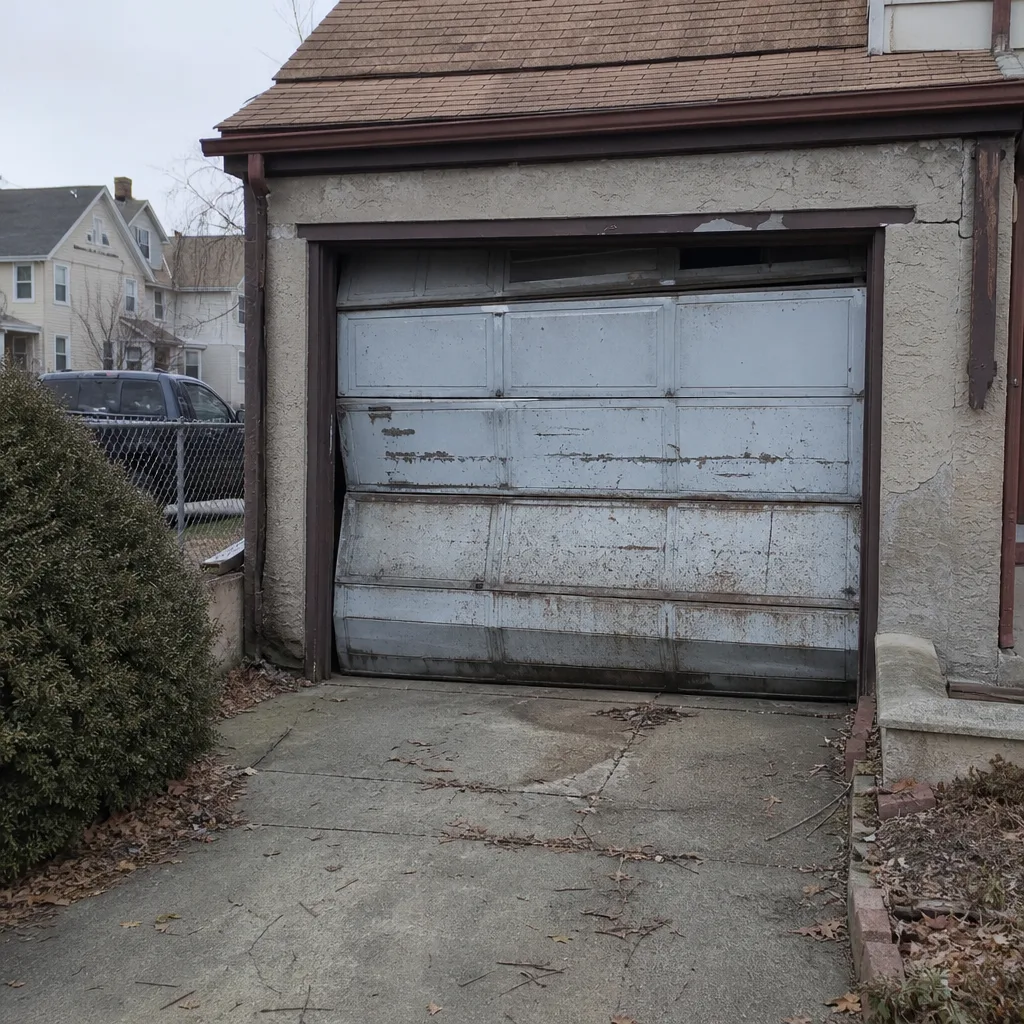 Before
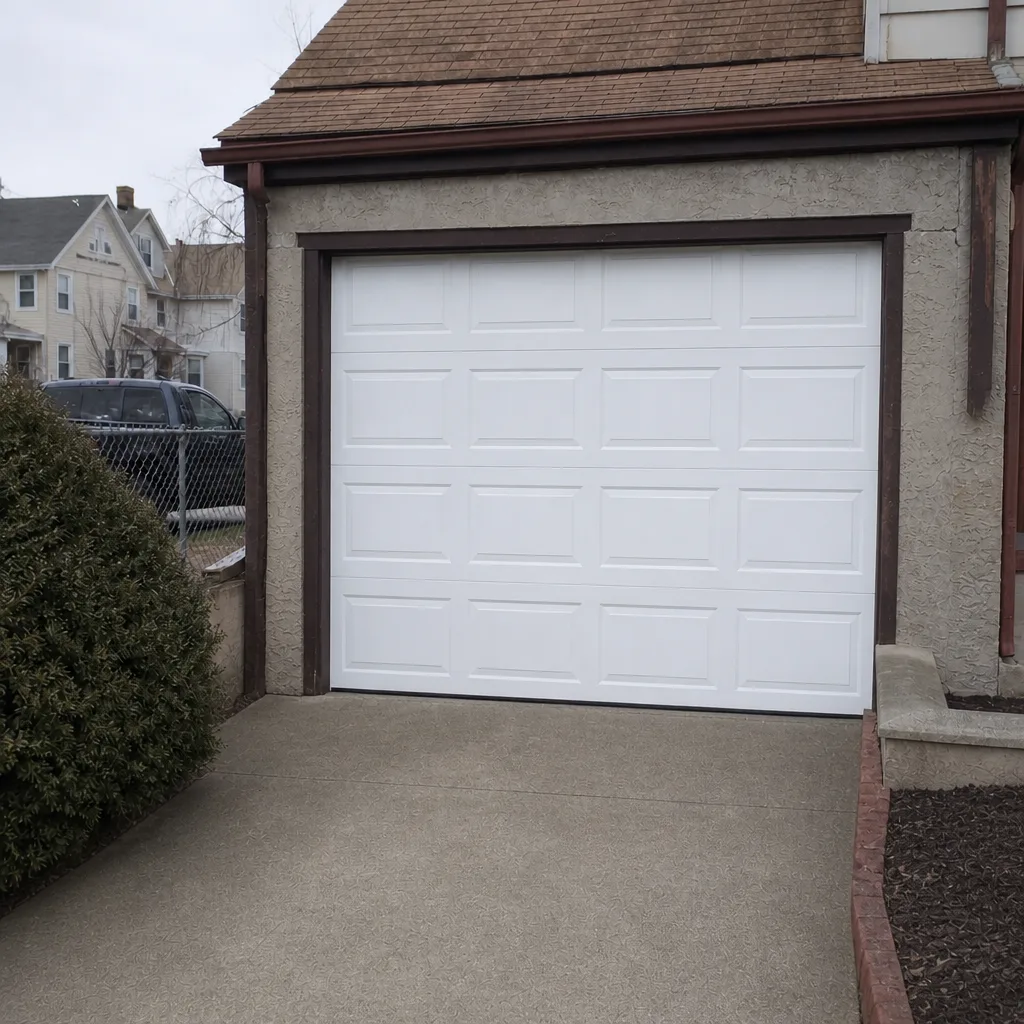 After
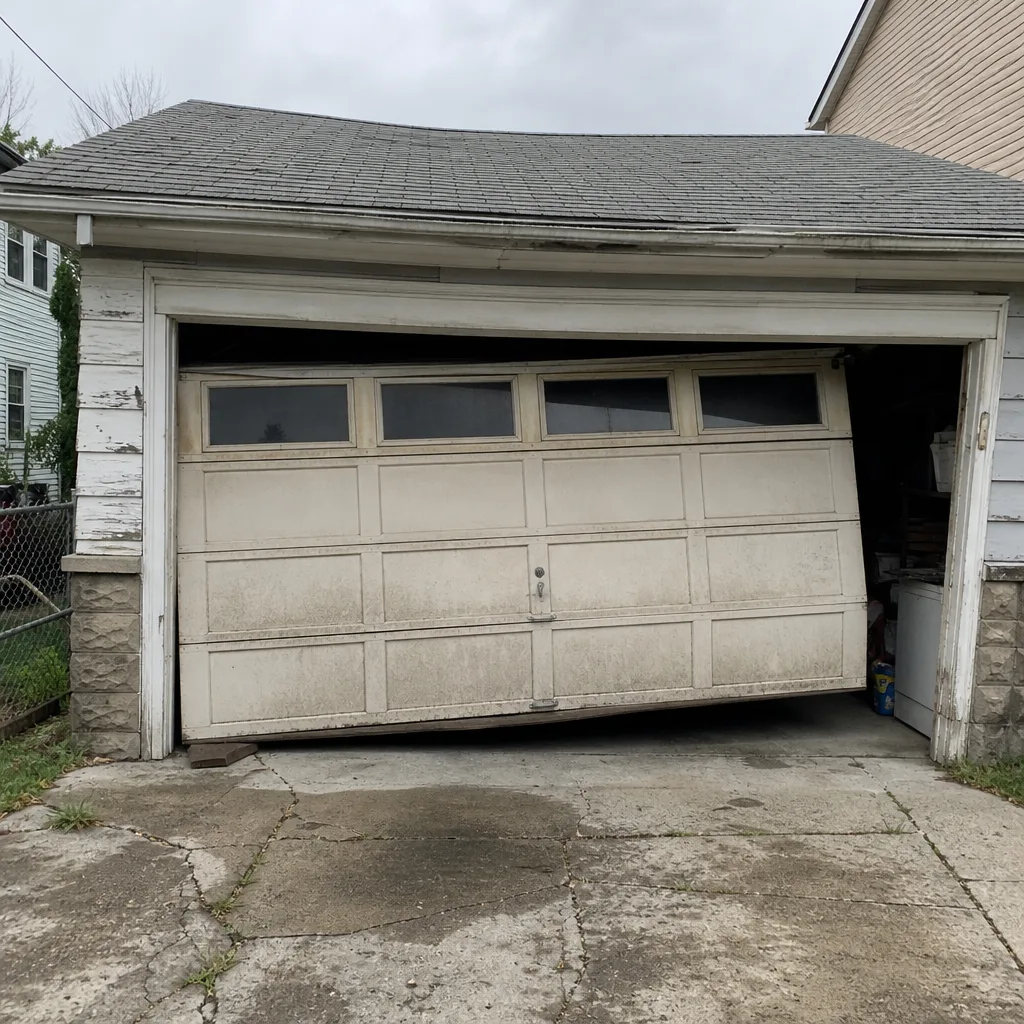 Before
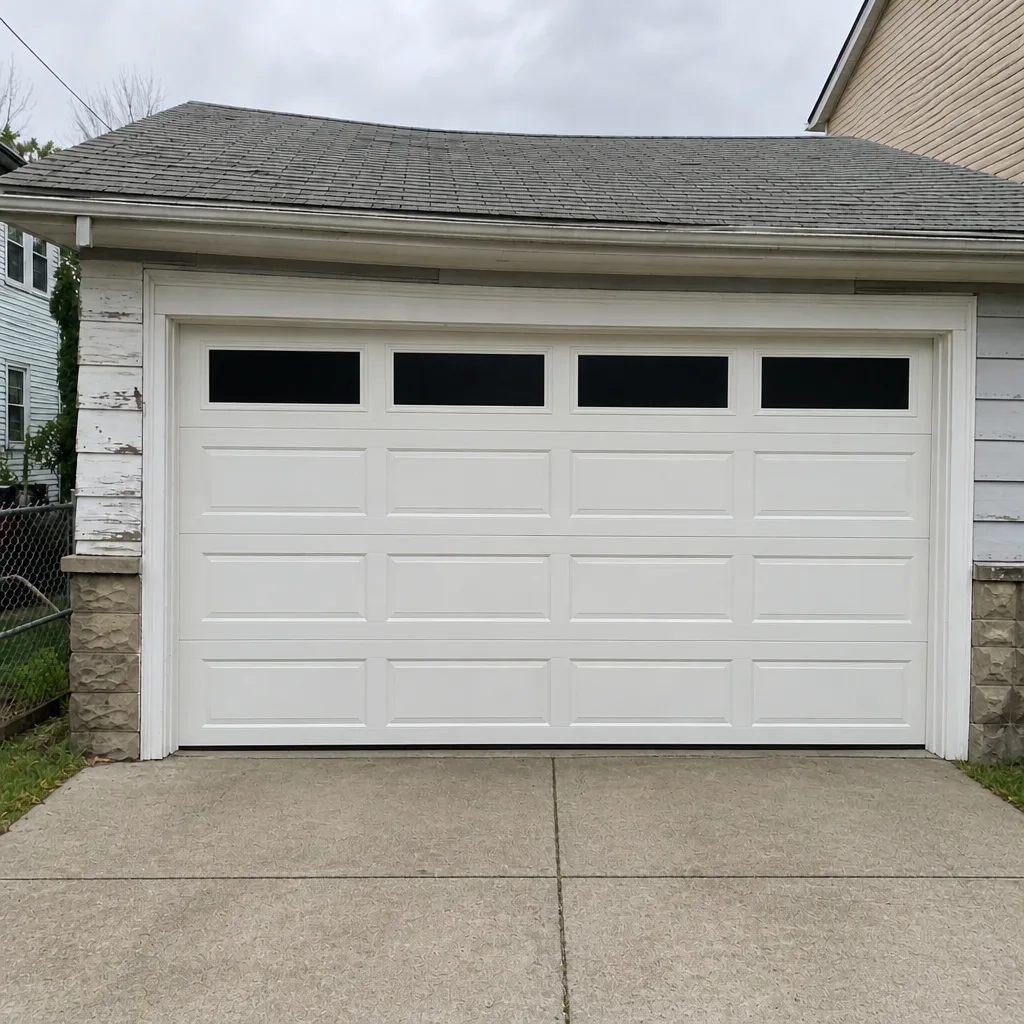 After
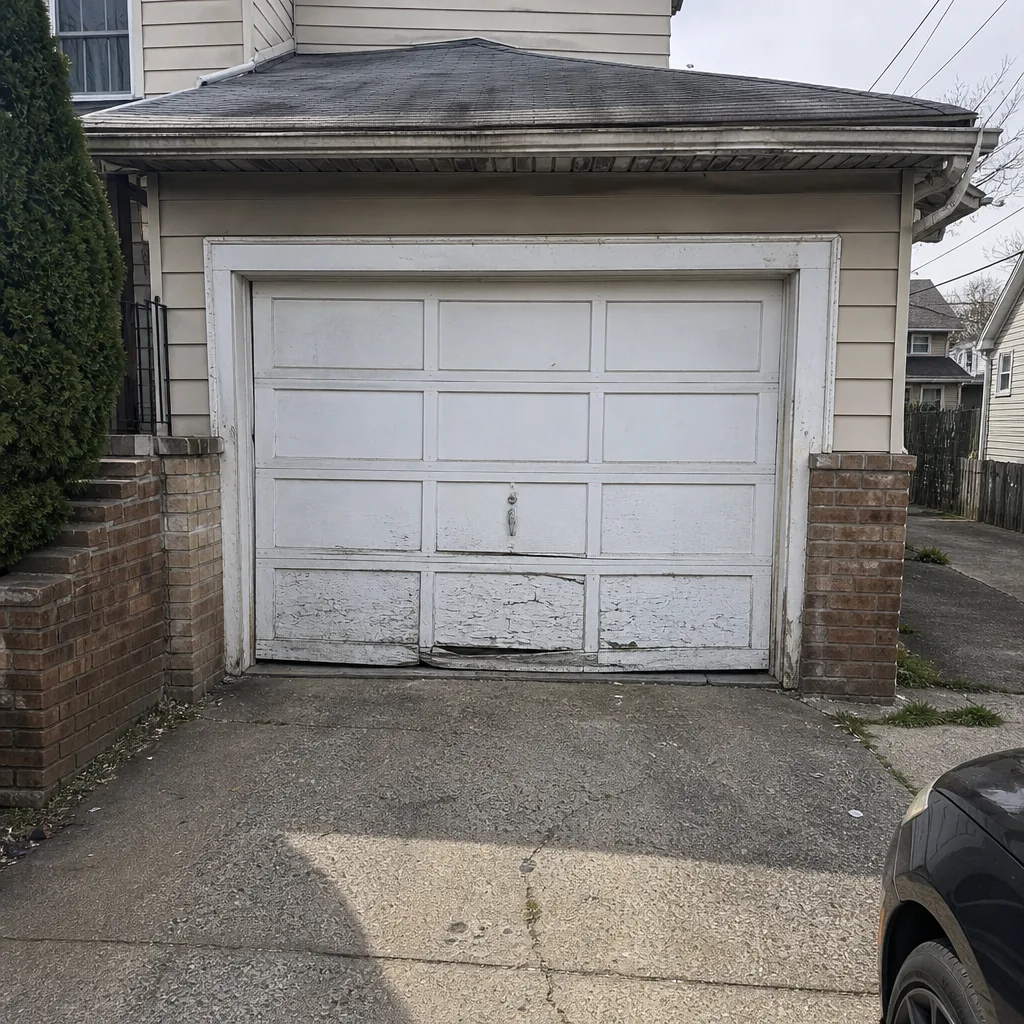 Before
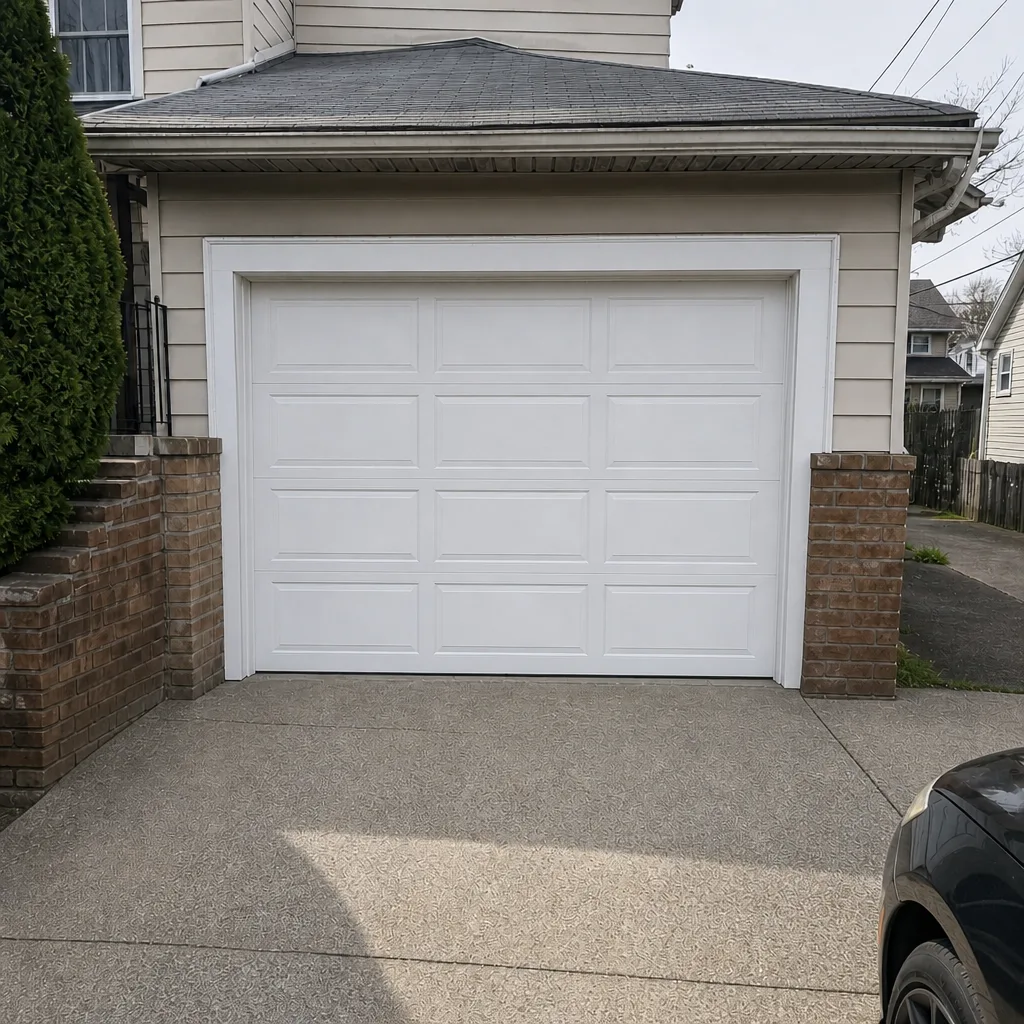 After
When to Call a Professional
Call a professional when any warning sign traces to a part under tension or a component that carries the door’s weight. That means springs, cables, opener wiring, and any door that has come off its track or is hanging unevenly. A hesitation before opening, a grinding sound, or a door that struggles on the opener but works manually all point to problems that get worse with use, and they’re worth a professional look before they fail entirely. We see plenty of doors in Paterson where a week of patience turns a smaller repair into an emergency call. Paterson Garage Door Repair Pros offers free estimates in Paterson. Call (833) 800-4197. We answer 24/7. Fast dispatch from 7am to 7pm, Sunday through Friday.
Our technicians have up to 13 years of experience, and we work the major brands by name, so when we look at your LiftMaster or Genie system, we’re reading the actual components, not guessing at a workaround. Every price is quoted and agreed before any work starts, and the written estimate sets the final cost. If you’re considering a full replacement rather than a repair, Paterson Garage Door Repair Pros is the place to start, and the same team handles everything from a repair through new installation so you never need a separate contractor as the job grows.
Frequently Asked Questions
The earliest and most reliable sign is a half-second hesitation when the door starts to open. A torsion spring losing tension shows up first as a moment of strain before the door lifts, and it typically precedes a full break by weeks. Other early signs include the door moving unevenly, sitting slightly higher on one side, and the opener sounding louder than usual. Call (833) 800-4197 for an exact quote if you spot any of these, especially in cold Paterson weather when a weakened spring is most likely to fail.
Most garage door repairs in Paterson run a few hundred dollars, with the total depending on the part and what’s gone wrong. Spring replacement, cable work, and opener repair each fall into different ranges, and a written estimate is standard before work starts. Call (833) 800-4197 for an exact quote. Estimates are free, and the price you agree on is the price you pay. Nothing gets added once the job is done.
Yes, same-day service is available for most repairs, and emergency service exists for doors that are stuck, won’t close, or leave the garage open. Call (833) 800-4197. We answer 24/7. Fast dispatch from 7am to 7pm, Sunday through Friday. A call outside dispatch hours is booked into the next opening. If your door has failed and the car is blocked or the garage is open, say so when you call so it gets prioritized.
No. The price you agree to on the written estimate is the price for the job. If we find something different from what we expected, we’ll tell you before we touch anything and give you a revised quote to approve. Nothing starts before you agree to the number. Call (833) 800-4197 for an exact quote. Estimates are free.
The local professionals we connect you with are licensed and insured as New Jersey requires. Our technicians have up to 13 years of experience, and we work on equipment from LiftMaster, Chamberlain, Genie, Clopay, Amarr, Wayne Dalton, Craftsman, and Raynor using each brand’s actual components and repair logic. Call (833) 800-4197 to talk through your door.
No. A torsion or extension spring is under enormous tension and can cause serious injury if released unexpectedly, which is why spring repair requires specialized tools and training. A door that’s been running on one broken spring is also heavier than it should be, and the opener will strain to lift it. Call (833) 800-4197 for an exact quote. We handle spring repair in-house rather than sending it out.
The Bottom Line
Most garage door failures give you weeks of warning. A hesitation, a grinding sound, a door that sits slightly off-level, an opener that’s louder or slower than it used to be, or a photo-eye that reverses in the late-afternoon sun all point to the same short list of parts: springs losing tension, cables dragging, rollers wearing out, or sensors drifting out of alignment. The 30-second gap test and a monthly walk-around catch most of it, and anything that touches a spring, cable, or opener wiring is a call, not a DIY job. Paterson doors in particular see the seasonal temperature swings that stress these parts, so a little attention goes a long way toward keeping the car outside the garage instead of trapped inside it. When it’s time to look, call (833) 800-4197 for a free estimate.
Written by the team at Paterson Garage Door Repair Pros.