
Last updated November 21, 2026
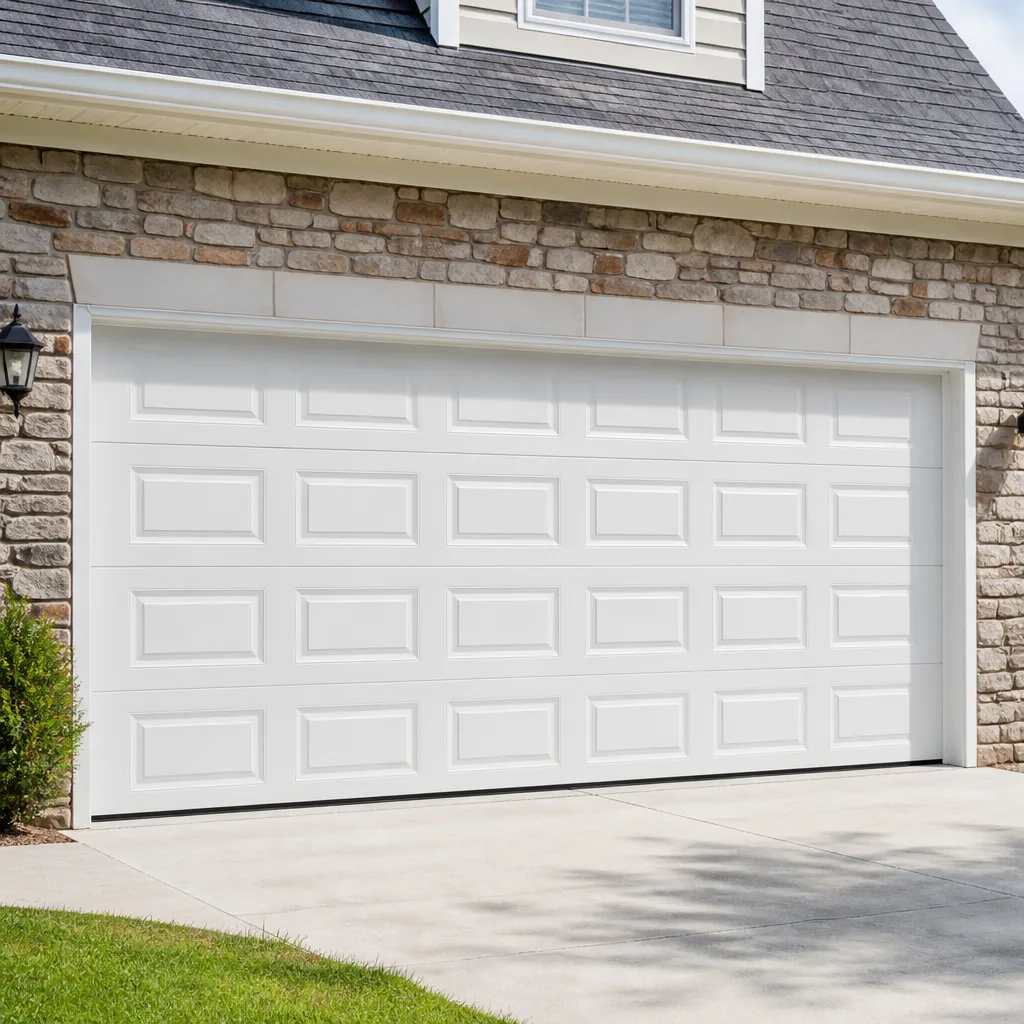 Raised-panel steel
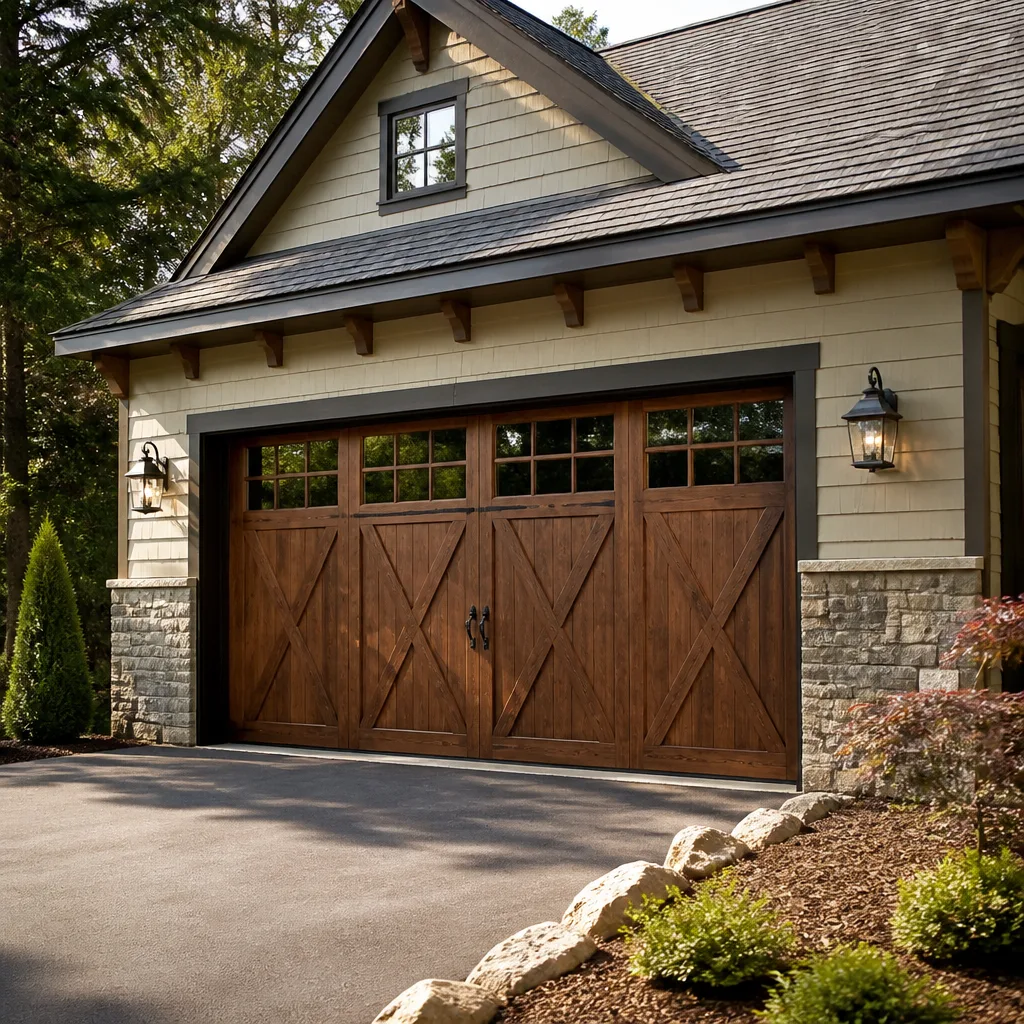 Carriage house
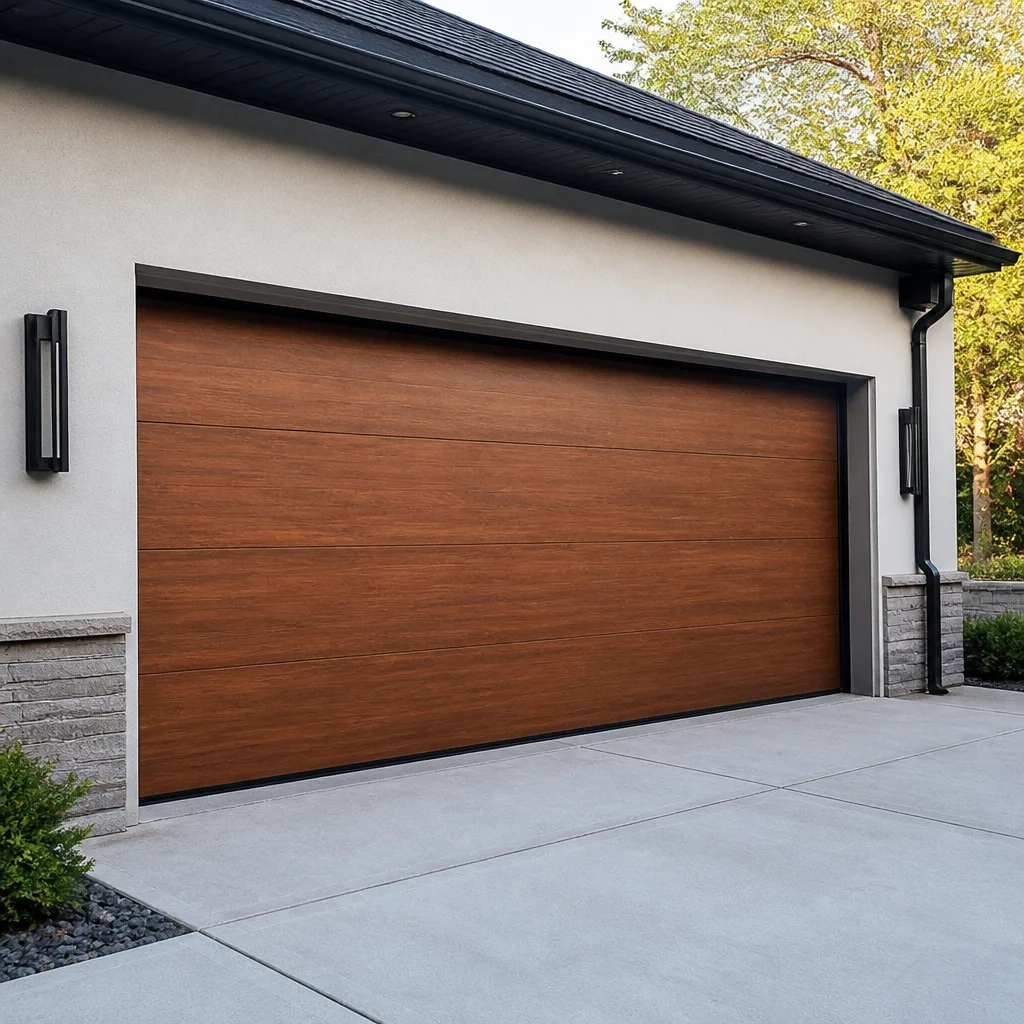 Modern flush
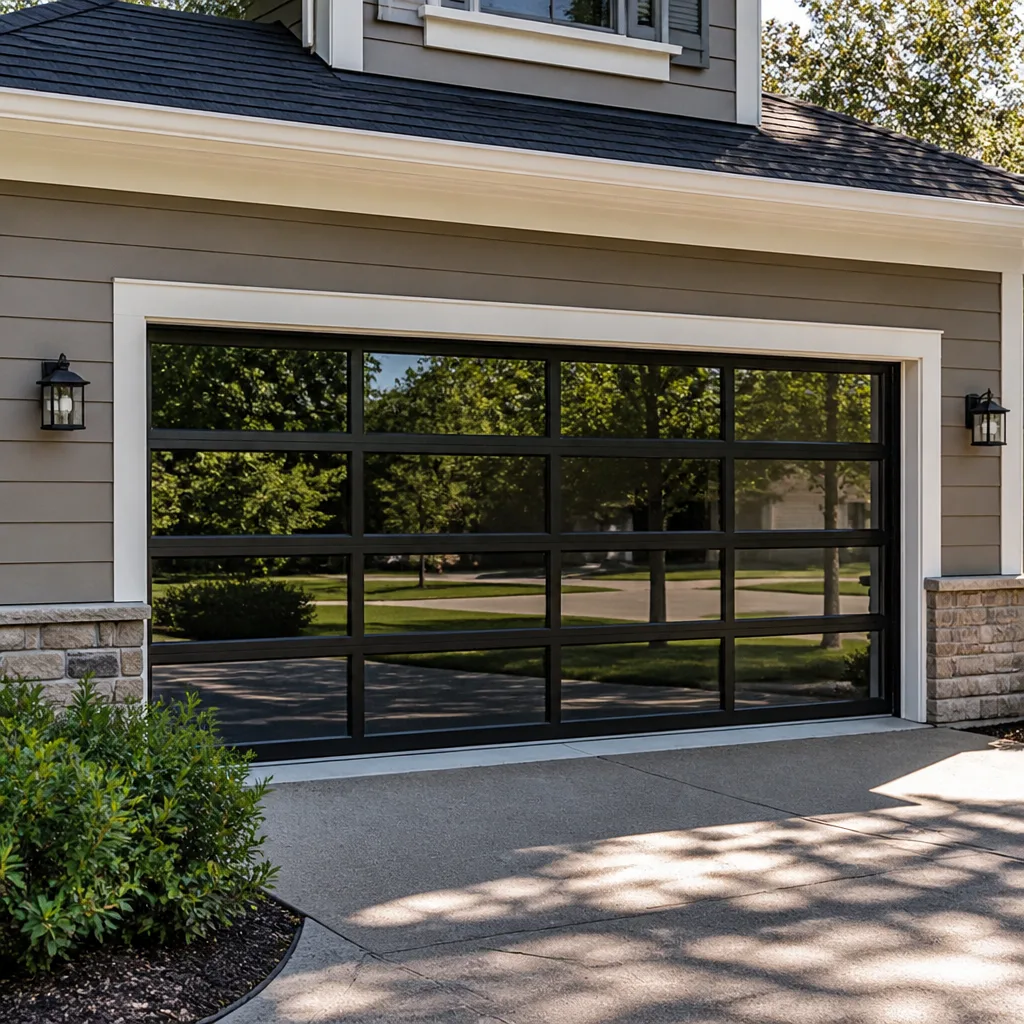 Full-view glass
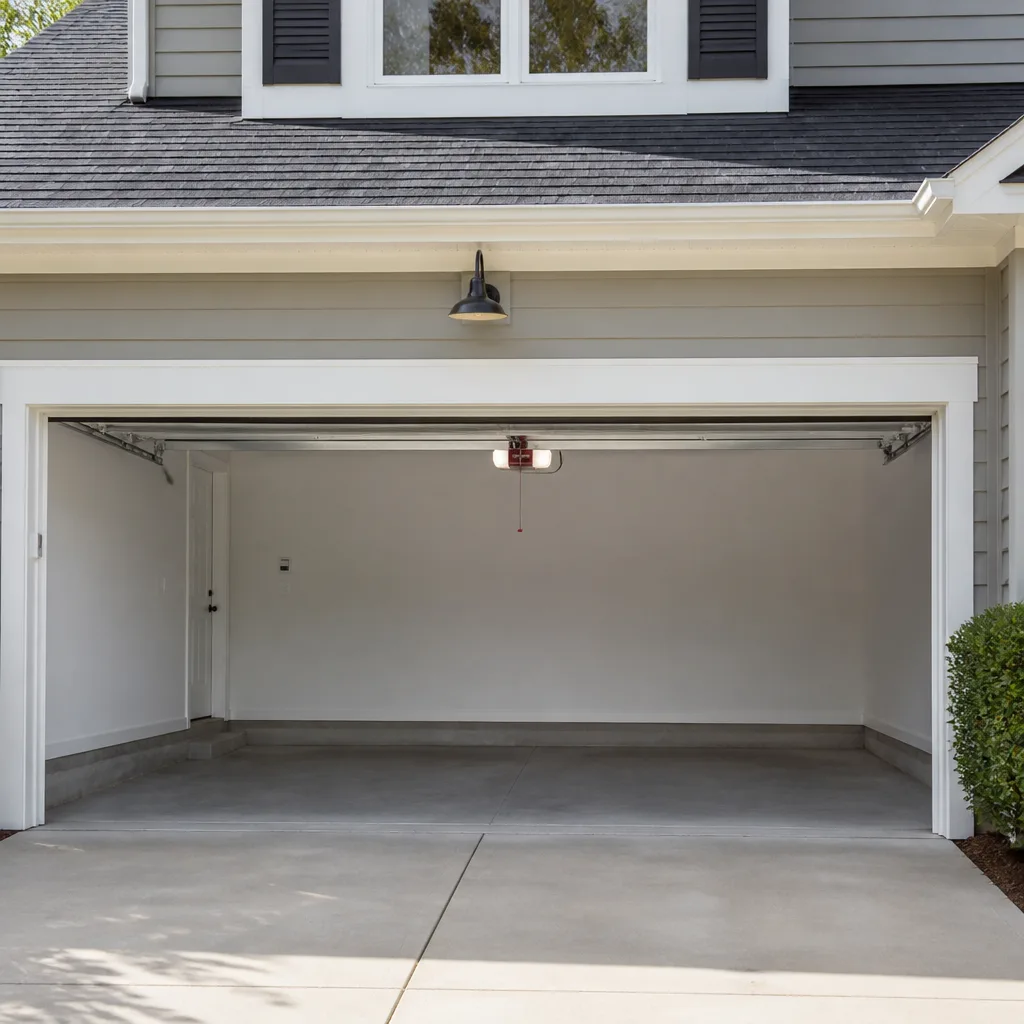 LiftMaster openers
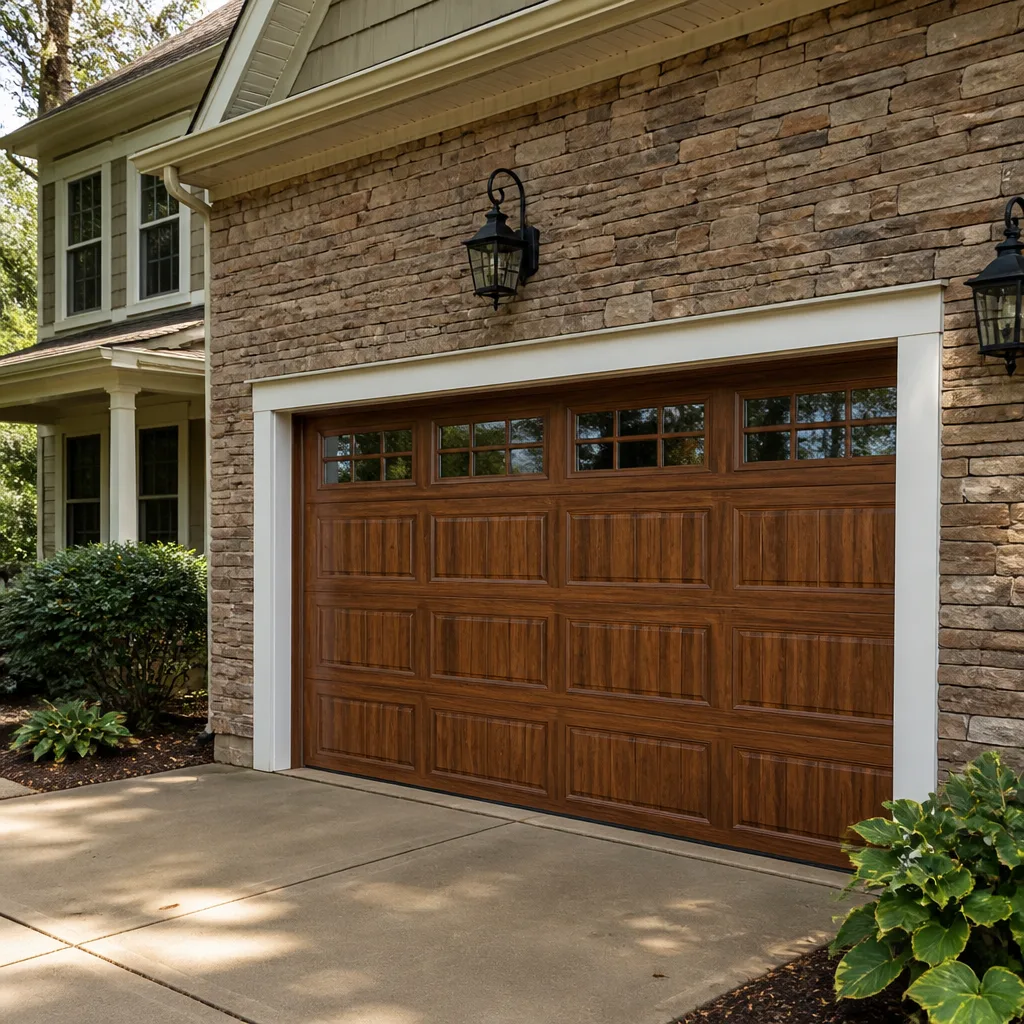 Chamberlain openers
Full 25-point door and opener safety check with every visit - springs, cables, rollers, tracks, and your LiftMaster or Chamberlain opener included
You get a price before we start. It does not change when the pro arrives.
Get your free estimateHow to Hire a Garage Door Contractor in Paterson: A Step-by-Step Guide
Most homeowners searching for garage door help in Paterson start with price. That’s backwards. The real question isn’t who’s cheapest, it’s who actually does this work for a living. A quick search returns dozens of names, but a large share of them are general handymen and HVAC outfits that added “garage doors” to their service list and keep a spring kit in the van. A garage door is a tuned mechanical system under serious tension, and the difference between a specialist and a side-service generalist shows up in the quote, the parts, and the safety of the finished job. This guide walks you through the exact questions, documents, and red flags that separate one from the other, from your first phone call to the final walk-through.
Quick Answer
To hire a garage door contractor in Paterson, verify licensing and insurance first, confirm the company performs spring and opener work in-house rather than subcontracting it, and insist on a written estimate that itemizes parts by brand and model. Ask directly whether the technicians are trained on your specific system, and check that reviews mention garage door work specifically, not general contracting. A specialist will answer all of this without hesitation. A generalist usually can’t.
Styles & brands we work with
- Raised-panel steel
- Carriage house
- Modern flush
- Full-view glass
- LiftMaster openers
- Chamberlain openers
Table of Contents
- Why a garage door specialist and a general handyman aren’t the same hire
- What license and insurance should a Paterson garage door contractor carry?
- The interview questions that expose a generalist
- What a legitimate written estimate includes
- How to validate reviews for garage door work
- Spring work: why it stays in-house or shouldn’t be hired out
- Matching the contractor to your door and opener brand
- Common mistakes to avoid
- When to call a professional
Why a garage door specialist and a general handyman aren’t the same hire
A garage door is one of the heaviest moving assemblies on a house. The panels, tracks, hinges, rollers, cables, and springs all work together, and a torsion spring holds enough stored energy to cause serious injury when it’s handled wrong. That’s the core reason this is a specialist trade. A handyman can hang a shelf or patch drywall. A garage door that won’t close, or one with a snapped spring, is a different category of job.
The gap shows up in a few predictable places:
- Tools and training. Torsion spring replacement calls for specific winding bars and a working knowledge of how turns are counted and set. A generalist with a generic socket set is out of their depth.
- Diagnosis. When a door reverses on its own, a specialist checks the photo-eye sensor alignment, the logic board, the travel limits, and the force settings in order. A generalist often replaces parts until the symptom stops.
- Parts. Specialists know which springs, rollers, and openers fit which door. Generalists tend to substitute whatever the local supply house has on the shelf.
- Scope. A specialist can carry a repair through to a full replacement when the door reaches the end of its life. A handyman can’t.
In Paterson, a lot of the housing stock is older, and the garage doors on those homes are often a mix of original equipment and later replacements. That makes model-specific knowledge worth more than generic repair ability. If you’re weighing a repair against a replacement, our garage door repair page covers how that call usually gets made.
What license and insurance should a Paterson garage door contractor carry?
New Jersey regulates home improvement contractors through the state’s Home Improvement Contractor (HIC) registration, administered by the Division of Consumer Affairs. Any contractor performing home improvement work for a homeowner, including garage door installation and repair, is generally required to hold that registration. Ask for the registration number and confirm it. Don’t take a business card at face value.
Beyond registration, here’s what to verify before anyone touches your door:
- Home improvement registration. Ask for the number in writing, then look it up through the state’s consumer affairs database. A legitimate contractor won’t balk at this.
- General liability insurance. Ask for a certificate of insurance that names the policy and the coverage. If a door panel gets dropped or a wall gets damaged, liability coverage is what protects you.
- Workers’ compensation. If the company sends employees rather than a single operator, ask about workers’ comp. If a technician is injured on your property and there’s no coverage, the exposure can land on you.
- Written contract. New Jersey requires a written contract for home improvement work above a certain threshold, and it should spell out the scope, the price, and the payment schedule. A verbal “we’ll sort it out” is not a contract.
Whether a specific garage door job needs a municipal permit depends on the scope. A like-for-like repair usually doesn’t. A structural change, a new opening, or certain electrical work on an opener circuit might. The honest answer is that permit rules vary, so call Paterson’s building department and ask directly for your address and job type. A contractor who tells you permits never matter for any job is telling you something about how they operate.
The interview questions that expose a generalist
You can learn most of what you need in a five-minute phone call. The trick is asking questions that a generalist can’t answer without hedging. Here’s the short list we’d suggest, and why each one matters.
- “Do you do your own spring work, or do you bring someone in?” Many general repair companies decline spring jobs or quietly subcontract them. If the person quoting you won’t be the one doing the work, you want to know who is.
- “How do you set the tension on a torsion spring?” You don’t need to understand the answer. You need to hear a specific one. A specialist will talk about winding bars, turns, and matching the spring to the door weight. A generalist will go quiet.
- “Do you repair openers, or just replace them?” A dedicated opener repair service diagnoses the trolley carriage, the logic board, the travel limits, and the safety sensors. A company that only swaps openers is selling, not repairing.
- “What brands do you work on?” A real specialist names the systems they know. We work on eight major brands, including LiftMaster, Chamberlain, Craftsman, and Raynor, and that matters because opener logic and door hardware vary by brand.
- “Can I see the estimate in writing before you start?” The answer should be an unqualified yes. If it’s “we’ll figure it out when we’re there,” walk away.
- “Who is coming to my house, and are they your employee or a subcontractor?” This tells you who’s accountable if something goes wrong.
Our technicians have up to 13 years of experience, and much of what they know is the specific behavior of specific systems. If you already have a named-brand opener and want a straight answer on it, our garage door opener repair page covers the common failure points by system.
What a legitimate written estimate includes
The written estimate is where cut-rate outfits hide their shortcuts. A proper estimate is specific. A weak one is vague on purpose. Here’s what you should see on paper before any work begins.
- Parts, itemized by brand and model. “Spring replacement” is not specific. “Torsion spring, matched to door weight, [brand]” is. The same goes for rollers, hinges, cables, and openers.
- Labor broken out separately. Bundling “parts and labor” into one number is the oldest trick for marking up cheap offshore hardware. When you can’t see the parts cost, you can’t tell what you’re paying for the hardware.
- The diagnostic findings. What was actually wrong, in plain language. If two things are broken, the estimate should say so.
- What’s not included. A good estimate tells you what it does not cover. That’s how you avoid a surprise on the final invoice.
- A clear total. Your written price is the price. The estimate should say so.
One phrase to watch for: “parts and labor” as a single line item, with no breakdown. It’s the classic marker of a company that plans to install whatever’s cheapest and charge specialist prices. Ask for the parts line by itself. A straightforward contractor will provide it. A cut-rate one usually won’t.
What a verbal quote leaves out
A verbal quote over the phone can be a starting point, but it’s not a price. It can’t account for what’s actually wrong with your door, and it can’t commit to specific parts. Any company that refuses to give you a written estimate before starting work is telling you that the price is negotiable after the fact. Take that at face value.
How to validate reviews for garage door work
A five-star rating on a general contractor listing tells you almost nothing about garage door work. What you want is reviews that describe the same job you’re about to have done. Read for specifics, not stars.
- Look for the job type. A review that says “replaced my torsion spring and adjusted the track” is worth more than “great service, highly recommend.”
- Look for the brand. Reviews that name the system – a LiftMaster opener, a Chamberlain belt drive, a Raynor door – tell you the company has actually worked on your equipment.
- Look for the diagnosis. Did the contractor correctly find the problem, or swap parts until it worked? Reviewers usually mention this when it happened.
- Check whether the reviewer mentions the installing company or a subcontractor. Reviews describing a third party who showed up unannounced are a sign of subcontracted work.
It also helps to read reviews from Paterson specifically, rather than reviews that could be from anywhere in the state. Housing stock and door styles vary enough by neighborhood that local work is a better signal. Read with a critical eye and you’ll quickly separate specialists from generalists.
Spring work: why it stays in-house or shouldn’t be hired out
Spring replacement is the single most dangerous job in this trade, and it’s the one most often referred out. A torsion spring holds enough stored energy that a wrong move can cause serious injury, and extension springs under load can fail without warning. That’s why trained technicians use specific tools, follow specific procedures, and never let a helper improvise.
Here’s the practical implication for you as a homeowner:
- If a company subcontracts spring work, you have no direct relationship with the person doing it. The company that quoted you isn’t the company that shows up, and if something goes wrong, accountability gets murky.
- If a company declines spring work altogether, it’s not a full-service specialist. It’s a company that picked the easier jobs. That tells you what to expect when your door needs more than a roller swap.
- If a company offers to replace a single spring without mentioning the pair, ask why. Springs are usually replaced in matched pairs because a new spring paired with an aged one creates uneven tension. If both were installed at the same time, replacing one is a short-term fix.
We handle torsion and extension spring work in-house, with trained technicians and the specific tools that job requires. Our garage door spring repair page walks through the common failures and how we read them. If your existing springs have failed, don’t attempt it yourself – the risk isn’t the cost, it’s the injury.
Matching the contractor to your door and opener brand
Not all garage door and opener systems are interchangeable, and the difference matters at the repair bench. A technician who knows your specific brand works with the actual components and logic of your system, not a generic workaround. That shortens diagnosis, cuts the odds of a wrong part, and usually keeps the total price down.
Here’s what to ask about brand coverage, and what it actually means:
- Ask which brands they service. A specialist will name them. We work on eight major brands, including LiftMaster, Chamberlain, Genie, Clopay, Amarr, Wayne Dalton, Craftsman, and Raynor.
- Ask whether they stock the brand-specific parts. Openers from different brands use different logic boards, remotes, and travel-limit systems. The company that knows your brand carries or can source the right replacement without guessing.
- Ask if they service the opener and the door separately. A door problem and an opener problem are two different diagnoses. A company that treats them as one service is likely to replace more than it needs to.
If you’re in an older Paterson home with an original Craftsman or Chamberlain opener, or a newer installation with a LiftMaster or Genie system, brand familiarity is the difference between a same-day fix and a multi-visit back-and-forth. Ask for it directly when you call.
Common Mistakes to Avoid
- Hiring on price alone. A quote that’s much lower than the others usually means cheaper hardware or a missing step. Ask what parts are in the estimate before you decide. The garage door business rewards specificity, not savings.
- Accepting a verbal quote for spring work. Spring replacement prices depend on the door weight and the spring size. A number given over the phone without seeing the door isn’t a commitment, and it shouldn’t be treated as one.
- Assuming every handyman who lists garage doors can do the job. Many can’t. The job requires tools, training, and safety procedures a generalist usually doesn’t have. Ask the interview questions before hiring.
- Skipping the insurance and registration check. In New Jersey, home improvement registration and insurance are baseline expectations. If a contractor can’t produce them on request, that’s a stop sign.
- Replacing a single spring when both should be done. Matched pairs are standard because the springs wear together. Replacing one and leaving the other invites a second failure soon after.
- Ignoring review specifics. A five-star review that says “great service” doesn’t tell you whether the company can diagnose your specific system. Look for reviews that name the job and the brand.
- Letting anyone work without a written estimate. The written estimate is your protection. It sets the price and the scope. Without it, you’re relying on a handshake, and handshakes don’t cover a misdiagnosed door.
When to Call a Professional
Not every garage door problem needs a same-day call. Some do. If your door won’t close and it’s your only secure entry, that’s a security issue, and it’s worth calling now. If a spring has snapped and the door is stuck, that’s a spring job, not a DIY job. If the opener has stopped responding and the photo-eye sensor checks out, a technician can diagnose the logic board or the travel limits on site. If the door comes off its track, stop using it – forcing it can bend a panel or damage a hinge and turn a repair into a replacement.
Paterson Garage Door Repair Pros offers free estimates in Paterson – call (833) 800-4197. We answer 24/7. Fast dispatch from 7am to 7pm, Sunday through Friday. The price is set by the written estimate, so you know the total before any work begins.
See the difference
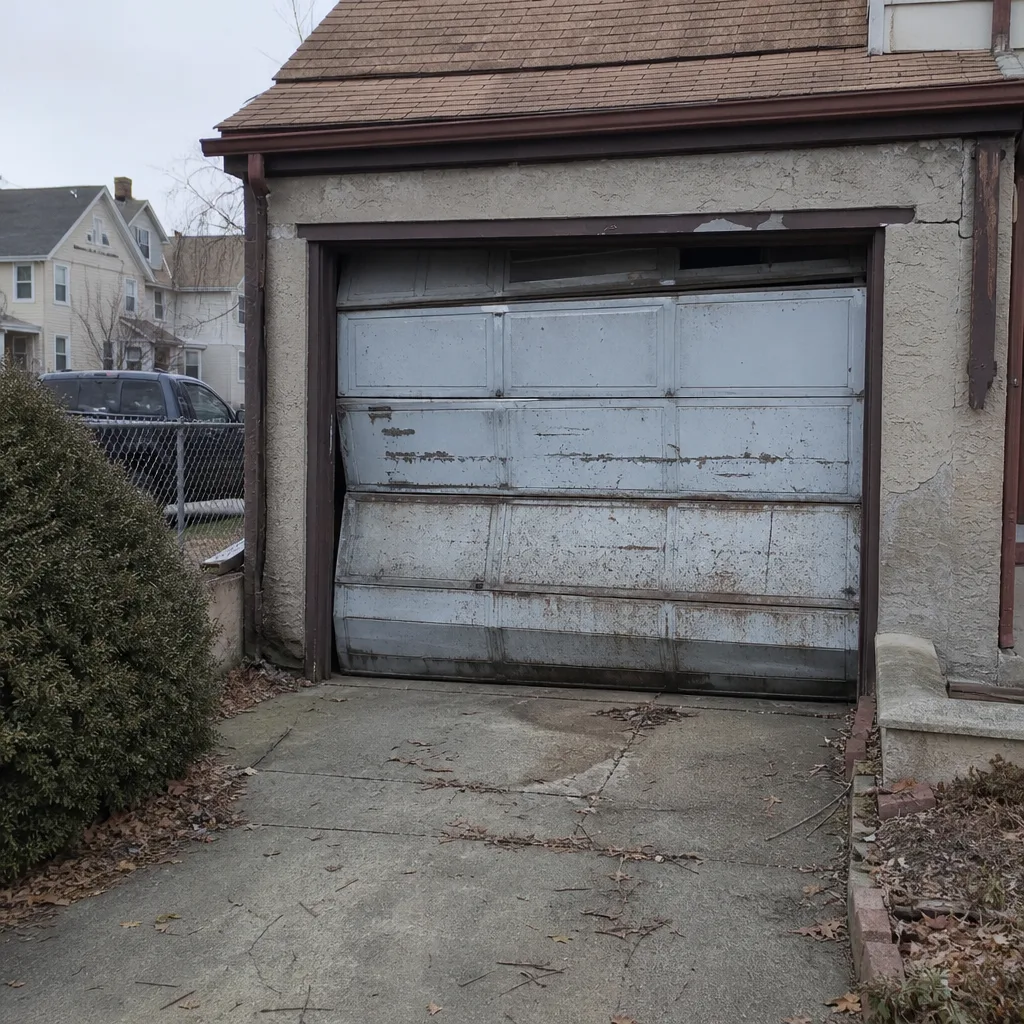 Before
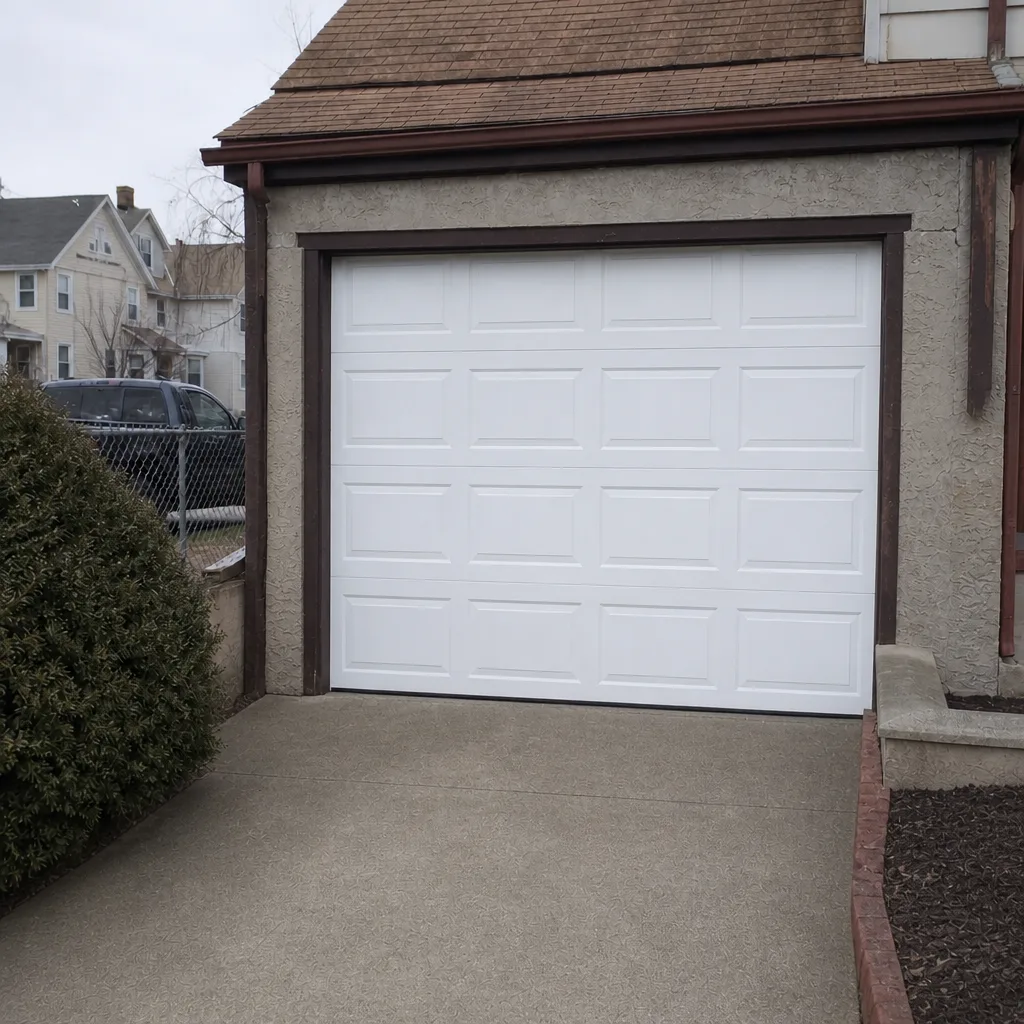 After
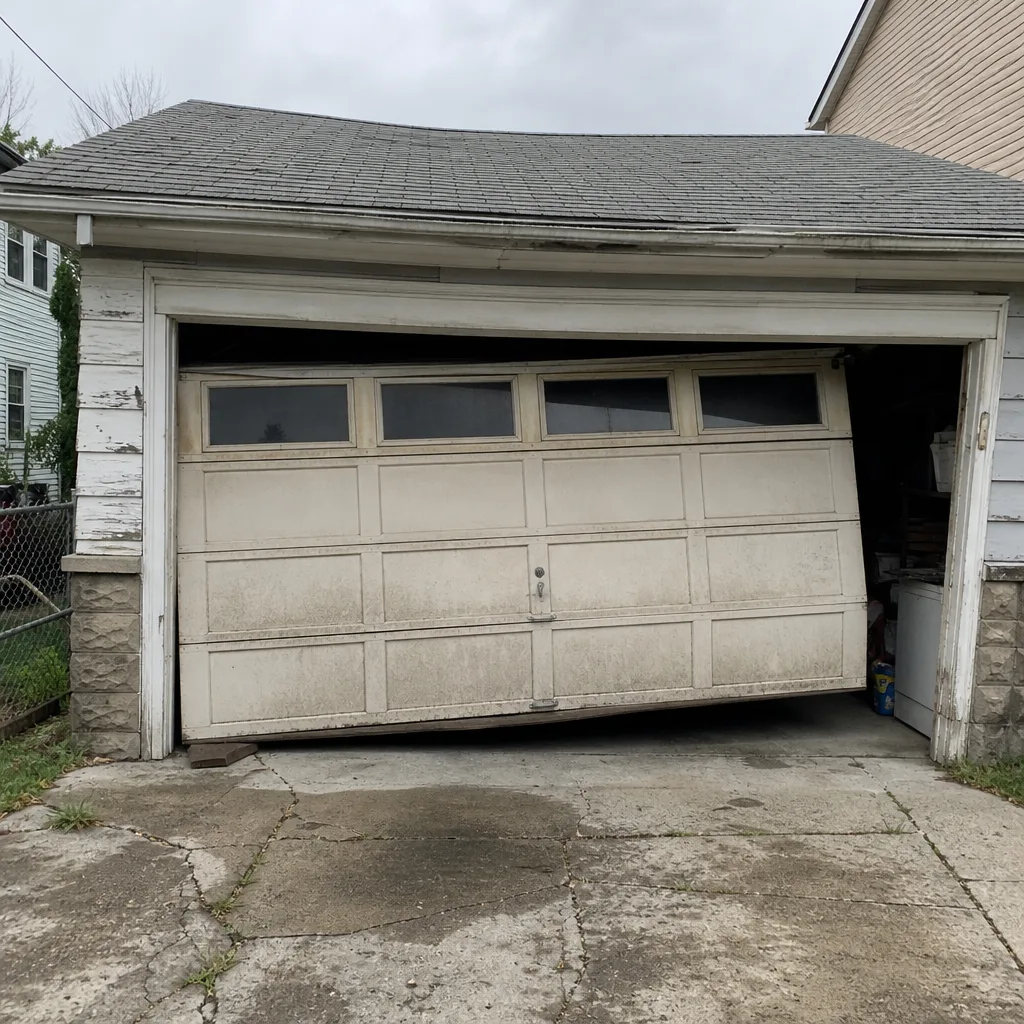 Before
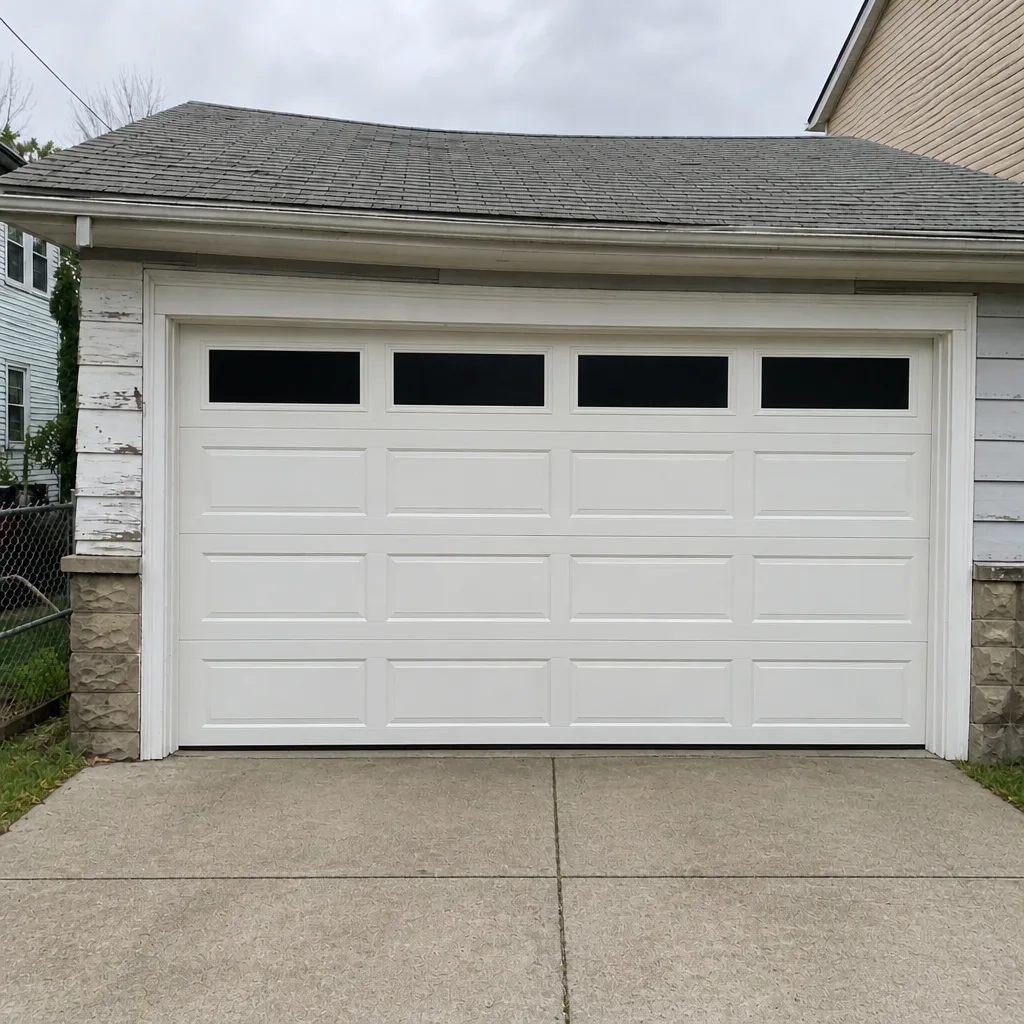 After
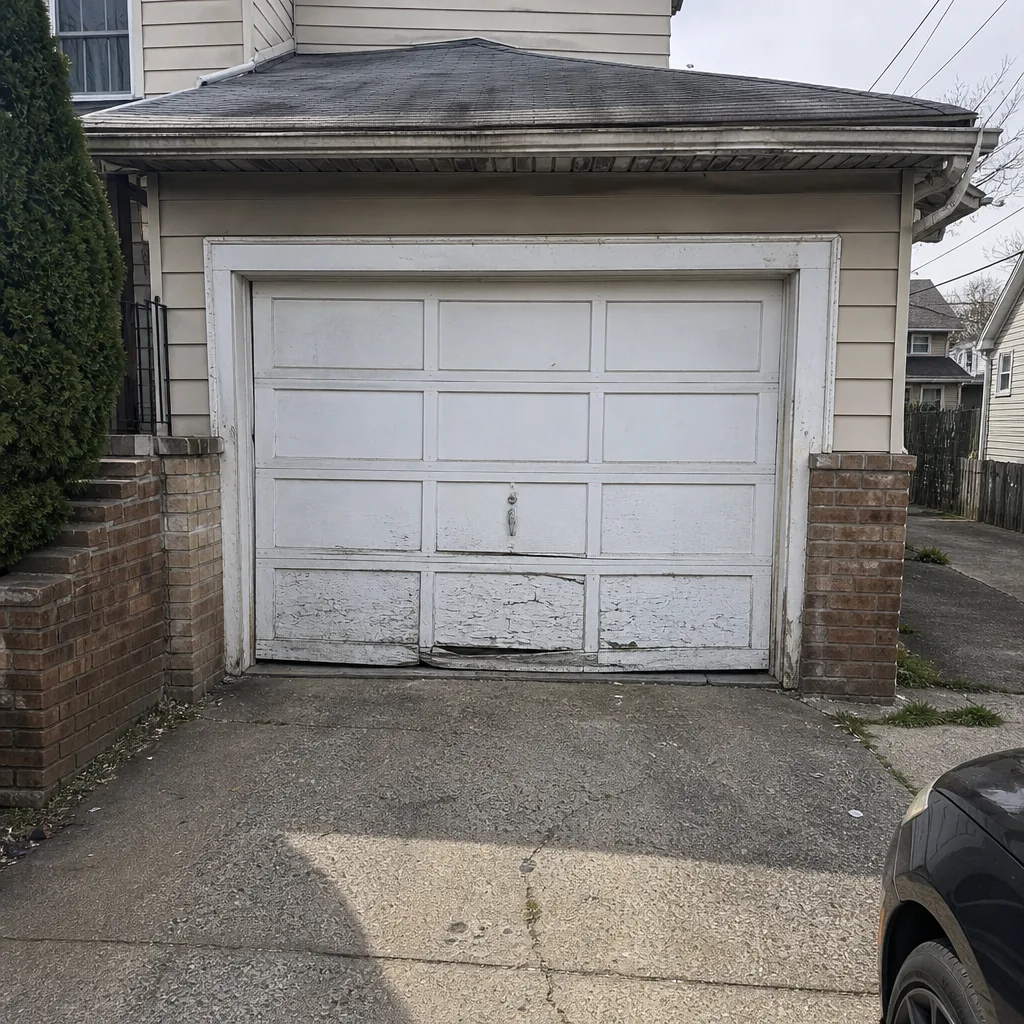 Before
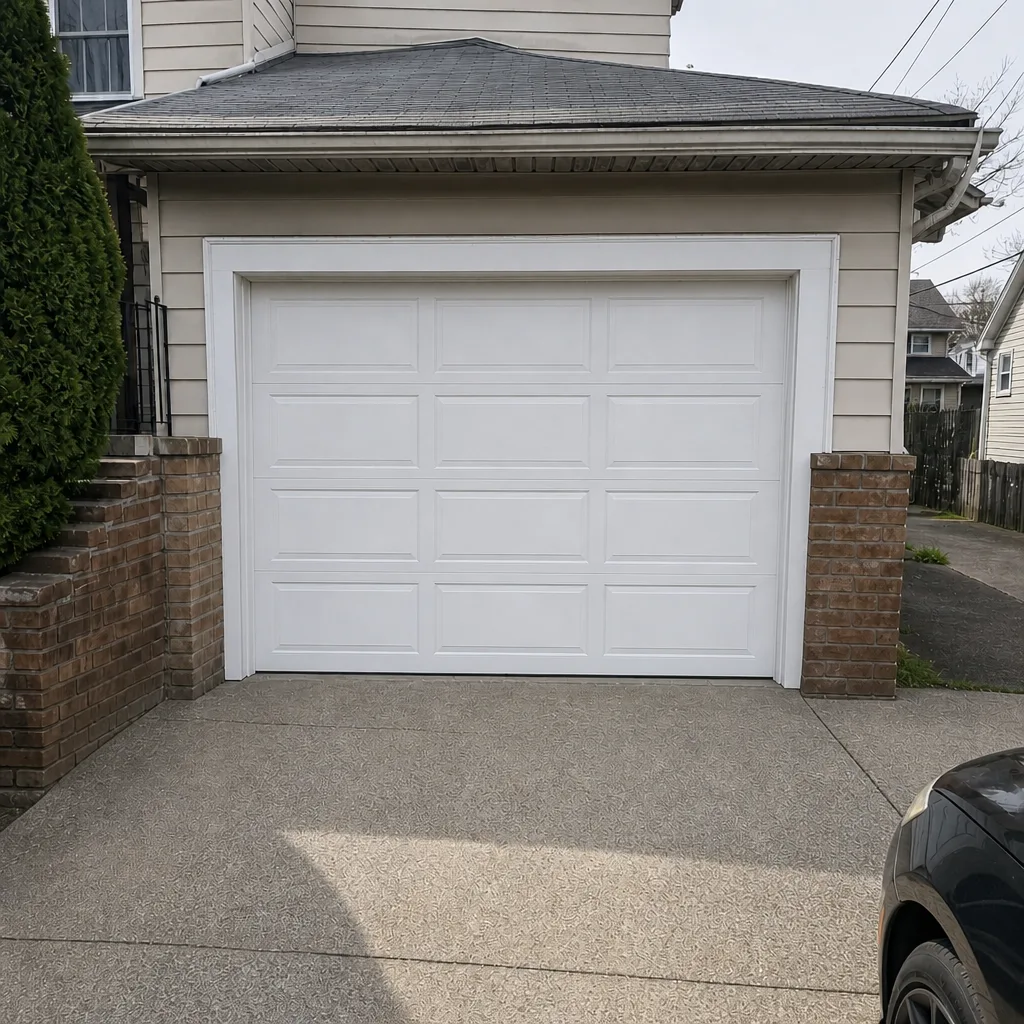 After
Frequently Asked Questions
Most garage door repairs in Paterson fall within a range set by the job itself, and the written estimate sets the final price. Spring replacement is per spring, and a matched pair costs roughly twice a single spring because both are replaced together. A quote given before the technician sees your door is not a price. Call (833) 800-4197 for a free estimate.
Same-day service is available for repair calls. We answer 24/7, with fast dispatch from 7am to 7pm, Sunday through Friday. A call outside dispatch hours is booked into the next opening. Call (833) 800-4197 and we’ll confirm the schedule for your Paterson address.
No. The price you agree to in the written estimate is the price for that scope of work. If the technician finds something the original estimate didn’t cover, you’ll be told before any additional work starts. Nothing happens without your approval.
The technicians we work with are vetted, and the local professionals we connect you with are licensed and insured as New Jersey requires. Ask for the registration number and a certificate of insurance before work begins. That’s the right habit for any contractor you hire in Paterson.
No. We handle torsion and extension spring work in-house with trained technicians. Many general repair companies refer this job out or decline it, which is one of the ways you can tell a specialist from a side-service generalist. If a contractor won’t confirm who’s doing the work, ask again.
A full installation is a scheduled project, not a same-day repair. It starts with a free measure, then a written price, then an order for the door and hardware. Timing depends on the door size and the brand. If you’re replacing a single panel versus a whole door, the scope differs and so does the timeline. Call for a free measure and a written price.
The Bottom Line
Hiring a garage door contractor in Paterson comes down to verification, not persuasion. Check the registration and insurance. Ask whether spring and opener work is done in-house or subcontracted. Insist on a written estimate that itemizes parts by brand and model. Read reviews for the job type and the brand, not just the star count. A specialist will pass every one of those checks without flinching. A generalist with a spring kit in the van usually won’t. If you’re ready to move forward, Paterson Garage Door Repair Pros is one company for the life of your door, from repair through installation.
Call (833) 800-4197 for a free estimate. We answer 24/7. Fast dispatch from 7am to 7pm, Sunday through Friday.
Written by the team at Paterson Garage Door Repair Pros.